Understanding Liquid Pool Shock and Shocking a Pool | HASA
What Is Liquid Pool Shock and "Shocking" a Pool? In the pool service industry, few terms are used as loosely—and as inconsistently—as “shock.” For...

Pool Products
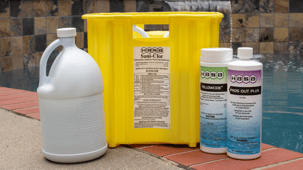
HASA has the chlorine, algaecides, and sanitizers you need to keep your pool or spa clean and clear.
Hot Tub Products
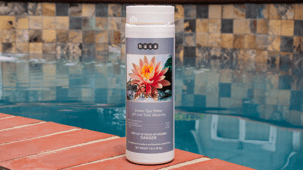
Shop our full line of Hi-Temp spa care products, including Eco-Safe Clarifiers and pH Increasers.
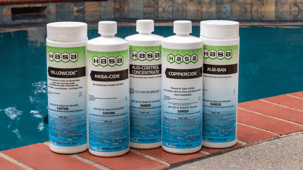
Ancillary Products
Our eco-friendly water treatments are science-backed and purposefully focused.
Mini-Bulk Program
We deliver a premium 12.5% sodium hypochlorite solution for sanitizing commercial pools and large-scale water systems.
5 min read

If your unofficial start of summer is Memorial Day weekend, that means the kickoff of pool season is just around the corner. When warm weather arrives, knowing how to open a pool properly can make the difference between a smooth start to the season and weeks of frustrating water problems.
Getting ahead of these challenges early is key. With test strips, proper water testing, and a step-by-step pool opening procedure, you can get ahead of seasonal problems and set up your backyard oasis for a summer of swimming.
Whether it’s your first time opening a pool for the season or it's part of your spring routine, it can still be a little surprising when the pool cover comes off. After months of sitting mostly unused, pools rarely look exactly the way they did when they were closed.
You may find the water level has dropped slightly, some debris has collected on the surface, or the water looks cloudy or dull. Leaves, pollen, dust, and other organic material can accumulate over the off-season, and sanitizer levels typically drop during the winter months when circulation and water treatment and circulation are reduced.
The good news is that these conditions are completely normal and usually easy to correct. With proper testing, circulation, and the right startup treatments, most pools clear up quickly. Follow the steps below, and you’ll have the water balanced, clean, and ready for a great swimming season.
As temperatures rise and pools see more use, chlorine is consumed faster than many pool owners expect. Sunlight, warmer water, organic debris, and increased swimmer load all place greater demand on sanitizer levels.
Under normal conditions, a pool exposed to several hours of sunlight can lose about 1 part per million (ppm) of chlorine per day, even when cyanuric acid (CYA) is present to help stabilize chlorine. As water temperatures climb and bather activity increases, chlorine demand can rise significantly. In some cases, pools may consume up to 10 ppm of chlorine over the course of a week.
If sanitizer levels drop too low, algae can establish itself quickly. Under favorable conditions, algae populations can double in roughly eight hours. Within 24 hours to a few days, millions of algae cells can develop in untreated water. By the following week, a pool that once looked clear can begin turning cloudy or even green.
Once levels drop, things can move fast. Clear water can turn cloudy quicker than most pool owners expect.
At the start of the season, it’s a good idea to shock your pool. This process raises sanitizer levels high enough to eliminate contaminants that may have built up during the off-season.
One of the most common questions pool owners ask during spring opening is how much chlorine to add to a pool at startup. The exact amount depends on the size of the pool and the condition of the water, but a typical startup treatment involves raising free chlorine levels significantly higher than normal maintenance levels. A shock treatment typically raises free chlorine to around 20 ppm to eliminate contaminants and combined chlorine.
Liquid chlorine is often the most effective option for this treatment. For example, in a 10,000-gallon pool, approximately two gallons of 12.5% liquid chlorine can raise free chlorine levels to about 25 ppm. Because it dissolves instantly, liquid chlorine begins working immediately to disinfect the water.
Once the chlorine level drops back below about 5 ppm, you can perform additional water treatments. At this stage, it is a good time to test for phosphates and perform a phosphate removal treatment if needed. Phosphates can contribute to overall water quality challenges, so reducing them early in the season can support more consistent water conditions.
Starting the season with higher chlorine levels helps quickly get rid of winter buildup. By establishing a strong sanitizer level early on, you support balanced water and ensure sanitizer levels are working effectively.
Now that you know what to expect once the pool cover comes off, follow this simple step-by-step pool opening plan to stabilize water chemistry, reduce the risk of algae growth, and ensure sanitizer levels are working effectively.
Before making any adjustments, test the pool water thoroughly. Pay particular attention to cyanuric acid (CYA) and total dissolved solids (TDS).
TDS should not exceed source water levels by more than about 1,500 ppm. If it does, you may need to partially drain and refill the pool to restore balance.
Cyanuric acid should generally remain below 50 ppm. Higher levels can reduce chlorine effectiveness and make it harder to control algae.
Once water chemistry has been tested, perform a chlorine shock treatment by raising free chlorine levels to approximately 20 ppm and maintaining that level for at least four hours. This helps destroy organic contaminants and combined chlorine that may have accumulated during the off-season.
After chlorine levels drop below about 5 ppm, test the water for phosphates. Phosphates can contribute to overall water quality challenges, and elevated levels can make water harder to manage over time.
Ideally, phosphate levels should remain below 500 parts per billion (ppb), with 200 ppb or lower considered optimal.
Early-season algaecide treatments can support overall water clarity and balance as temperatures increase. Polyquat algaecides or copper-based products are commonly used because they provide broad-spectrum control.
Spring startup can also be a good time to add borates, which help stabilize pool chemistry. Borates act as a buffer that slows upward pH drift, helps prevent algae growth, and can improve water feel for swimmers. Recommended borate levels are typically no higher than 50 ppm.
Opening the pool for the season is one of the clearest signs that summer is on the way. Before anyone jumps in, though, it’s worth spending a little time getting the water back into shape after the long off-season.
Testing the water, restoring proper sanitizer levels, and adding the right startup treatments help get everything back on track. Taking care of these basics early makes it much easier to keep the pool clear and balanced once warmer weather and more swimmers arrive.
With the water cleaned up and the chemistry dialed in, the pool will be ready for those first hot days of the season. A little preparation now means more time enjoying the water—and a lot less time troubleshooting it later.
When it’s time to open your pool, use the HASA Pool Chemical Calculator for instant recommendations to optimize clarity, comfort, and safety for the entire swimming season.
Author: Terry Arko
Terry Arko brings more than 40 years of experience in the recreational water industry and currently serves as Technical Content and Product Training Consultant for HASA Pool, makers of HASA Sani-Clor. His career spans service and repair, retail sales, chemical manufacturing, technical service, commercial sales, and product development—giving him a uniquely comprehensive perspective on water chemistry from both the field and the lab.
A respected educator and thought leader, Terry has written over 200 published articles on water chemistry and has been teaching chemistry-focused courses for more than 30 years. His ability to translate complex science into practical, real-world understanding has made him a trusted resource for pool professionals seeking safer, smarter, and more consistent water care.
Terry is a Certified Pool Operator (CPO) Instructor with the Pool & Hot Tub Alliance (PHTA) and serves on the Recreational Water Air Quality Committee (RWAQC). In 2025 he was presented the Pool Nation Lifetime Achievement Award. Terry is driven by a lifelong commitment to education, innovation, and advancing industry standards through knowledge.
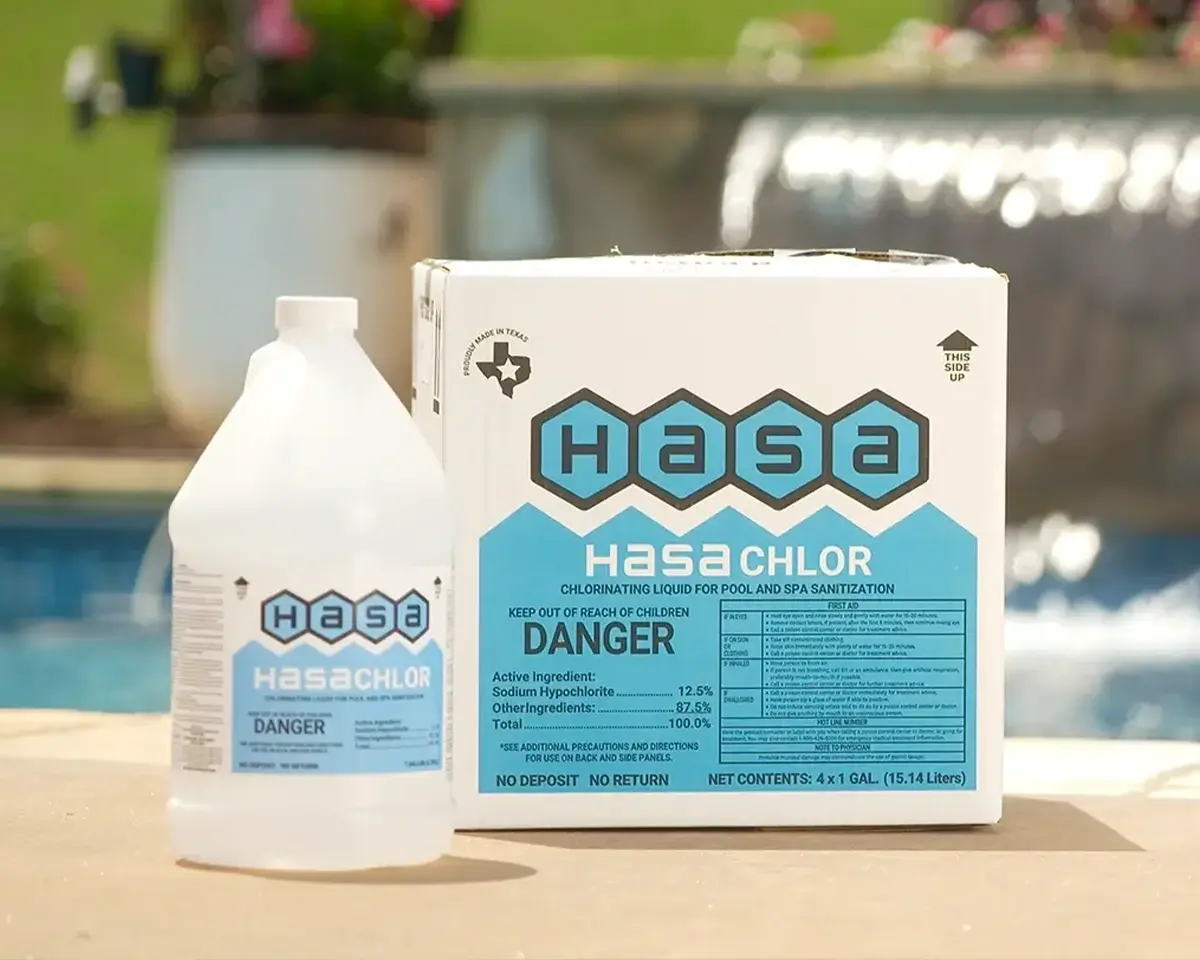
What Is Liquid Pool Shock and "Shocking" a Pool? In the pool service industry, few terms are used as loosely—and as inconsistently—as “shock.” For...

 HASA : Aug 01, 2025
Pool Ownership Without the Overload. Owning a pool should enhance your lifestyle—not overwhelm it. And yet for many homeowners, keeping pool water...
HASA : Aug 01, 2025
Keeping your swimming pool clean and well-maintained can feel overwhelming, especially when life gets busy. However, regular pool maintenance is...