
How to Clear an Algae Outbreak in a Swimming Pool
The last thing any pool owner wants is to have an outbreak of algae during the summer. Well maintained pools should be free from algae, however there...
⬢ Pool Professionals
Professional-grade products. Expert support. Built for your business.
⬢ Pool Owners
Eco-friendly, easy-to-use solutions to keep your pool clean and clear.
⬢ Industrial
Efficient treatment & supply. Performance-focused operations support.
⬢ Municipal
Reliable solutions & delivery. Sustainable treatment for public systems.
⬢ Dealers
Help your pool & spa customers with trusted, professional-grade products.
⬢ Pool Products
HASA has the chlorine, algaecides, and sanitizers you need to keep your pool or spa clean and clear.
⬢ Hot Tub Products
Shop our full line of Hi-Temp spa care products, including Eco-Safe Clarifiers and pH Increasers.
⬢ Ancillary Products
Our eco-friendly water treatments are science-backed and purposefully focused.
⬢ Mini-Bulk Program
We deliver a premium 12.5% sodium hypochlorite solution for sanitizing commercial pools and large-scale water systems.
⬢ Blog
Learn from water chemistry experts.
⬢ Videos
Browse instructional how-to videos.
⬢ Safety Data Sheets
Download SDS sheets for HASA products.
⬢ Pool Chemical Calculator
Achieve balanced chemistry easily.
⬢ Liquid Chlorine For Pools
A service professional’s guide that's been made simple.
⬢ Orenda Academy
For water chemistry & professional pool management knowledge.
⬢ Events
Find HASA at an event near you.
⬢ Rewards
Explore our HASA loyalty rewards program.
⬢ About HASA
Learn about HASA's commitment via the returnable packaging model.
⬢ Careers
Explore open positions with HASA.
Few things are more frustrating than watching your pool water shift from clear blue to murky green. The culprit? Algae. These microscopic organisms can bloom seemingly overnight, especially when your sanitizer levels drop or your water chemistry slips out of balance.
Many pool owners reach for algaecides as a quick fix for algae problems. But the truth is chlorine, when used correctly, is still your most powerful defense. Understanding how chlorine works and how it interacts with other elements in your pool is the key to keeping algae at bay.
Read on to learn what really causes algae to take hold—and why your chlorine levels might not prevent algae. We'll also cover how to clean a green pool using proven, chemistry-based methods with no additives required.
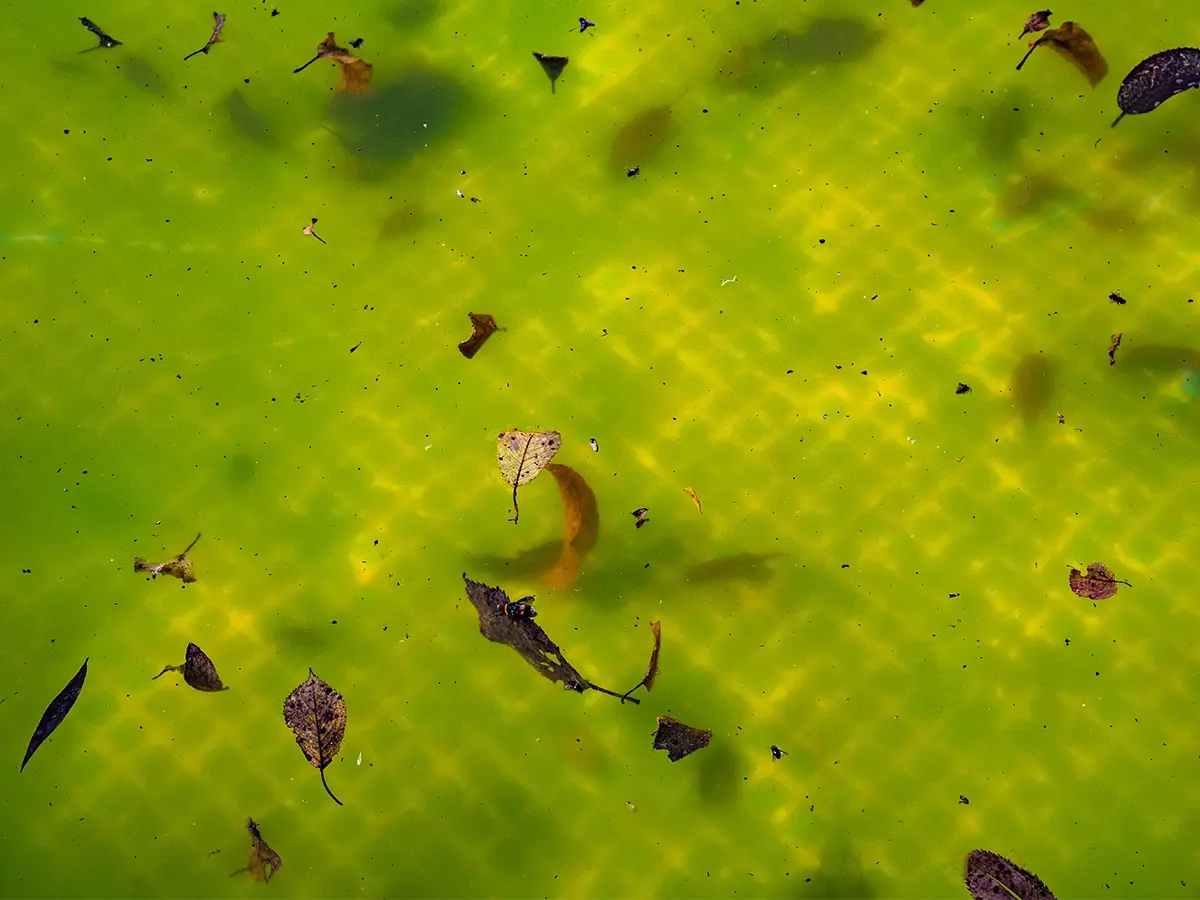
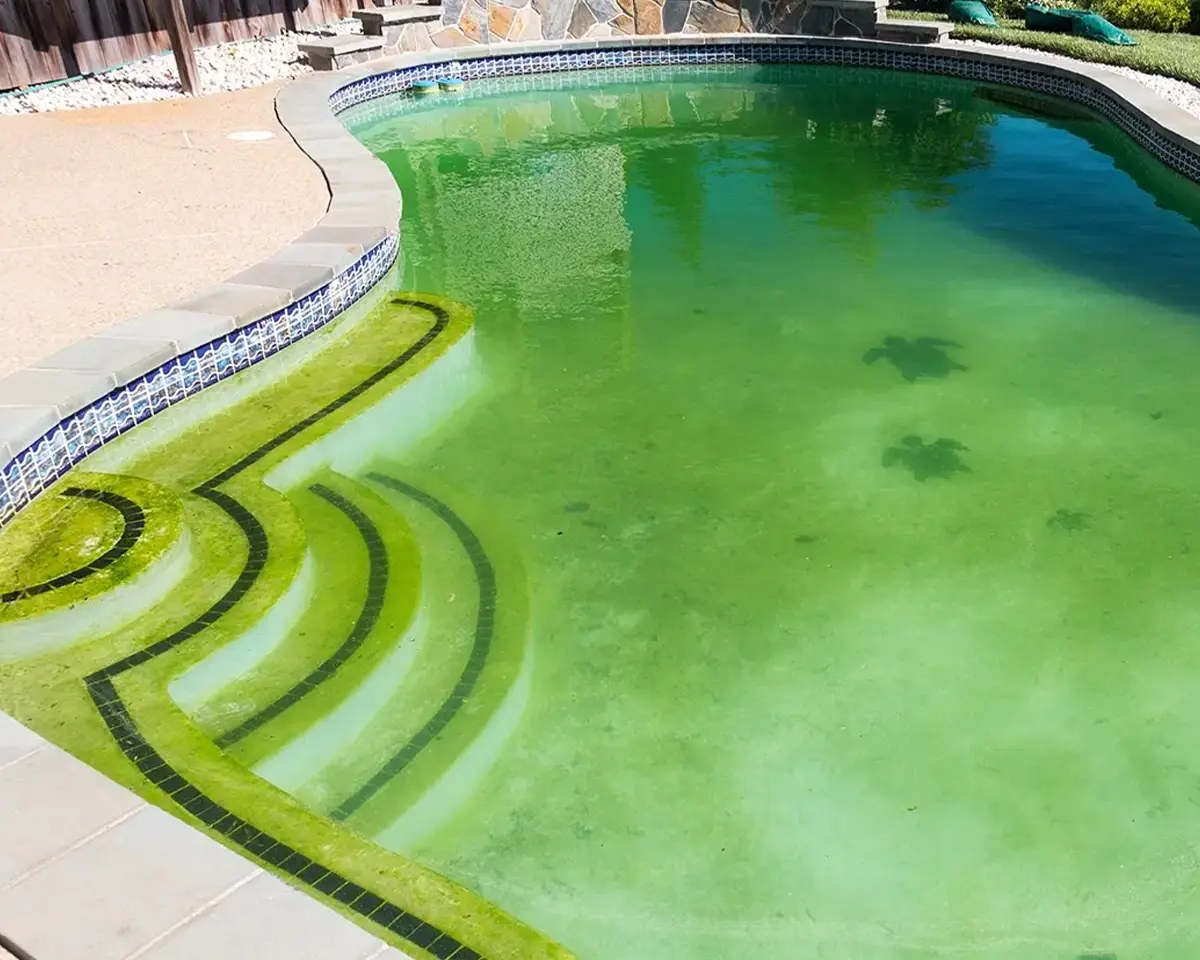
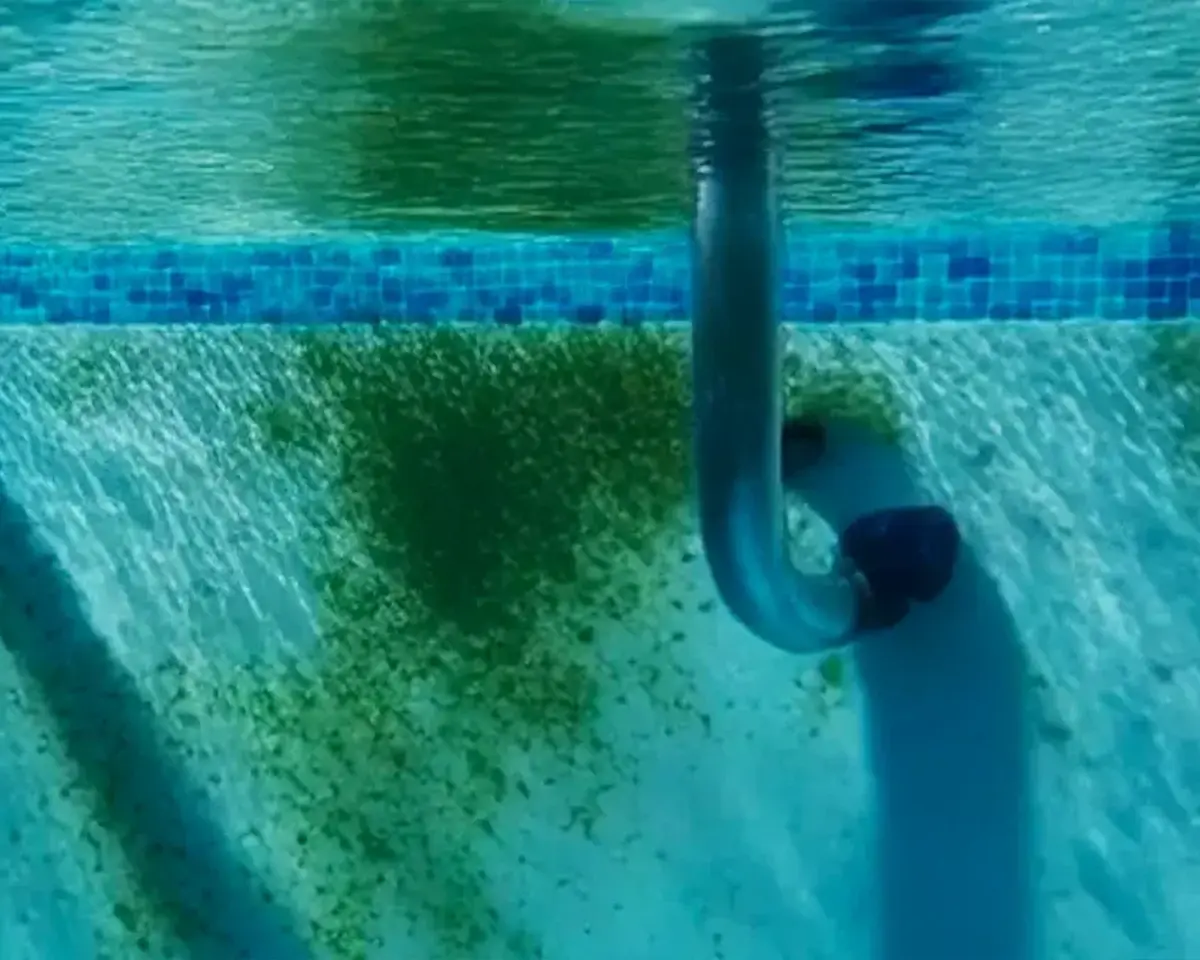
When your pool water turns green, it’s a clear sign that algae have started to grow. Algae spores are always present in the environment (carried by wind, rain, and even swimmers) so every pool has the potential for an outbreak. The difference between a clear pool and a green one comes down to how well your sanitizer (chlorine) is working.
Algae thrive in warm, sunny water where chlorine levels are low or inconsistent. When chlorine is depleted by sunlight, heat, heavy use, or organic debris, algae take advantage of the opening. Even if your test kit shows some chlorine in the water, it might not be enough of the right kind of chlorine to keep the pool protected from excessive algae growth.
Poor circulation or filtration can make things worse, allowing stagnant areas where algae can bloom undisturbed. Once it takes hold, algae not only turn the water green but can make surfaces slippery, cloud the water, and consume chlorine faster than you can add it.
The good news is that if your pool water is green, it is reversible. With the right balance of free chlorine (the form of chlorine that actually sanitizes) and consistent maintenance, you can clear your swimming pool and prevent algae cells from coming back without relying on bottled algaecides.
When it comes to removing and preventing algae, nothing beats chlorine. It’s one of the most effective sanitizers available and has been trusted for decades to keep pools clean, clear, and safe to swim in. Chlorine’s power comes from how it reacts once it’s added to water.
When chlorine dissolves in pool water, it forms hypochlorous acid (HOCl), the active compound responsible for killing bacteria and algae. HOCl is a vital part of free chlorine, or FC. It’s fast-acting and effective, destroying contaminants at the cellular level. The stronger your residual of free chlorine, the better your protection against algae growth.
But chlorine doesn’t work in isolation. Factors like pH and cyanuric acid (CYA), also called stabilizer or conditioner, affect how well it performs. For instance, at a pH around 7.5, about half of your free chlorine exists as active HOCl. Raise the pH too high, and that active chlorine becomes less effective.
Similarly, CYA helps protect chlorine from sunlight, but too much of it can “lock up” the chlorine and reduce its ability to kill algae.
That’s why it’s possible to see a normal chlorine reading (say, 2–4 ppm) and still have a green pool — because not all of that chlorine is active. Understanding this balance between chlorine, pH, and CYA is the foundation for effective, long-term algae prevention.
If chlorine is your main defense against controlling algae, then regular water testing and balancing is how you keep that defense strong. Chlorine’s effectiveness depends on two key factors: stabilizer levels (CYA) and pH. When either one drifts out of range, chlorine loses its ability to kill and prevent algae efficiently.
1. Manage your stabilizer (CYA) level.
Cyanuric acid (CYA) acts like sunscreen for chlorine, protecting it from being destroyed by the sun’s UV rays. But there’s a catch: too much stabilizer can “tie up” chlorine, preventing it from working properly. That’s why you might have chlorine in the water but still see algae forming.
A helpful rule of thumb: keep your free chlorine (FC) level at about 7.5% of your CYA level.
This ratio helps ensure enough active chlorine is available to stop algae before it starts.
2. Watch your pH level.
pH determines how effective your chlorine is at sanitizing. At a pH of 7.5, only about half of your chlorine exists as powerful hypochlorous acid (HOCl). If pH rises to 8.0, that drops to less than 25%. The higher the pH, the weaker your chlorine becomes, even if your test kit shows the right chlorine reading.
3. Keep water moving.
Algae love still water. Circulation and filtration are just as important as water testing and chemistry to prevent algae growth. Run your pump long enough each day to turn over the entire pool volume. And be sure to regularly brush or stir dead spots such as corners, steps, and behind ladders.
When your chlorine, CYA, and pH are in balance, you create a water environment where algae simply can’t thrive. This reduces the need for algaecides or emergency cleanups later on.
Occasional algae blooms can happen, especially after heavy rain, high swimmer loads, or hot weather. The good news is that a green pool doesn’t mean you need to drain or start over. With the right process, you can restore clarity, clean your pool, and prevent algae from returning.
Step 1: Test and adjust your water.
Start by testing your pool water for free chlorine, total chlorine, pH, and stabilizer (CYA) levels. If pH is high (above 7.6), bring it down to around 7.2 before shocking the pool as chlorine is most effective in this range.
Step 2: Brush and skim thoroughly.
Use a pool brush to loosen algae from walls, steps, and ladders. Skim debris and dead leaves from the surface. Brushing increases chlorine contact with algae and helps it work faster.
Step 3: Shock the pool.
“Shocking” means raising the chlorine level high enough to destroy algae and other organic matter. Use a chlorine-based shock and follow label instructions based on your pool size.
For most pools, aim to raise chlorine to 10 times the combined chlorine (CC) level. This is known as a breakpoint chlorination. For example, if your CC is 0.5 ppm, bring your chlorine to 5 ppm.
Step 4: Keep running your pool filter.
Keep your pump and filter running 24–48 hours after shocking. This circulates the chlorine and traps the dead algae. Backwash or clean your filter as needed to maintain good flow.
Step 5: Retest and rebalance.
Once the water starts clearing, retest chlorine and pH levels. Maintain your target free chlorine level (based on your CYA) and keep pH between 7.2 and 7.6.
After a bloom, it’s also smart to check your stabilizer level (sometimes it creeps too high from stabilized chlorine products). Diluting with fresh water can help lower CYA and keep chlorine active.
With this process, you can restore clear, safe water. And if you keep chlorine levels stable and circulation strong, you’ll prevent algae from returning.
Keeping your pool clear doesn’t require expensive additives, just smart, consistent maintenance. By maintaining the right balance of free chlorine, pH, and CYA, and ensuring proper circulation, you create algae-resistant conditions.
Regular brushing, testing, and the occasional water refresh help chlorine do its job more effectively. In the end, preventing green algae isn’t about reacting to an off-color pool, but staying ahead of one.
Take control of your pool chemistry with HASA. Explore our liquid chlorine solutions trusted by professionals—and now optimized for homeowners.
The last thing any pool owner wants is to have an outbreak of algae during the summer. Well maintained pools should be free from algae, however there...
HASA’s resident pool water treatment expert, Terry Arko, recently joined the Pool Guy Podcast Show to discuss why HASA’s Liquid Chlorine...
Maintaining a pool can be incredibly rewarding, but it requires knowledge and the right equipment to keep it both functional and inviting. For DIY...