 HASA
HASA
The Case of the Chlorine Smell
Chlorine Confidential: The Case of CAC, the chlorine smell
Pool Products
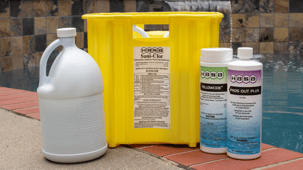
HASA has the chlorine, algaecides, and sanitizers you need to keep your pool or spa clean and clear.
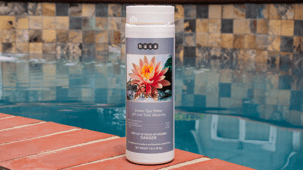
Hot Tub Products
Shop our full line of Hi-Temp spa care products, including Eco-Safe Clarifiers and pH Increasers.
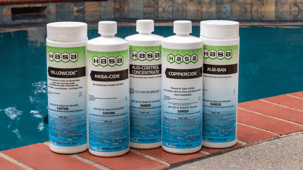
Ancillary Products
Our eco-friendly water treatments are science-backed and purposefully focused.
Mini-Bulk Program
We deliver a premium 12.5% sodium hypochlorite solution for sanitizing commercial pools and large-scale water systems.
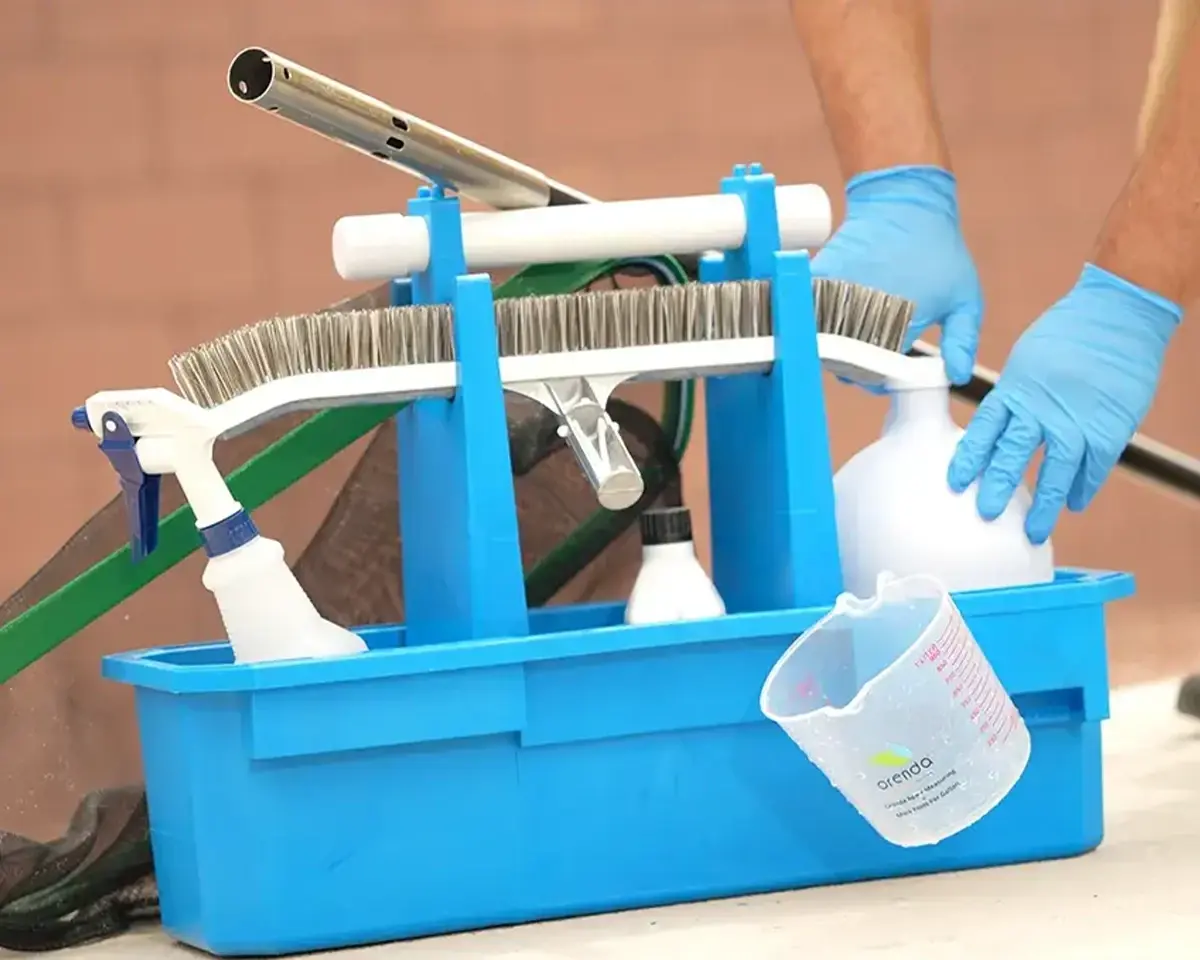
Taking care of your own pool doesn't require a garage full of equipment. A handful of good tools, an understanding of your circulation system, and a reliable way to test your water can handle most routine pool maintenance.
The trick is knowing which tools actually matter—and how to use them effectively. Here are 10 essentials that can make DIY pool care easier, more accurate, and a lot less frustrating.

Think of the telescopic pole as the handle for half your pool-care toolbox. A good pole can connect to your skimmer net, brush, vacuum head, and other attachments, allowing you to reach the entire pool without collecting separate handles for every job.
Look for a lightweight aluminum pole with a reliable locking mechanism. If you have a larger pool, make sure it extends far enough to comfortably reach the center and deepest areas.
Make it last: Rinse the pole and locking mechanism occasionally, especially around saltwater pools. Corrosion and mineral buildup can make adjustable poles frustrating to extend over time.
Leaves, insects, grass, and other debris are easier to remove while they're floating than after they sink to the bottom or begin decomposing.
That's more than a cosmetic issue. Removing organic debris physically means your chlorine doesn't have to react with as much of it.
A flat skimmer works well for quick surface cleaning, while a deeper leaf rake is much better for removing larger amounts of debris from the bottom.
Expert's advice: After a storm or windy day, removing debris should usually come before adding more chemicals. Don't ask chlorine to do a net's job.
Even with good water chemistry, pool surfaces still need some physical attention. Brushing removes dirt and biofilm, disrupts developing algae, and helps chlorinated water make better contact with the pool surface.
The important part is matching the brush to the surface. Plaster and other cementitious finishes can generally tolerate more aggressive brushing than vinyl or fiberglass surfaces.
Pay extra attention to steps, corners, benches, behind ladders, around lights, and anywhere you've seen algae appear before.
Recognize trends: If algae repeatedly appears in the same spot, don't just keep treating it. That location may be telling you something about circulation or an area your normal cleaning routine is missing.
Skimming gets what's floating. Vacuuming gets what has already settled.
Manual vacuum heads are inexpensive and give you precise control, while automatic cleaners can dramatically reduce the amount of routine work required.
Either way, removing dirt, algae, and debris from the pool is usually better than relying on chlorine and filtration to deal with everything.
Work Smarter: Vacuuming isn't just about appearance. Every leaf, pile of dirt, or dead algae you physically remove is material your sanitizer and filtration system don't have to deal with later.
If you're going to maintain your own pool, this may be the most important tool you own.
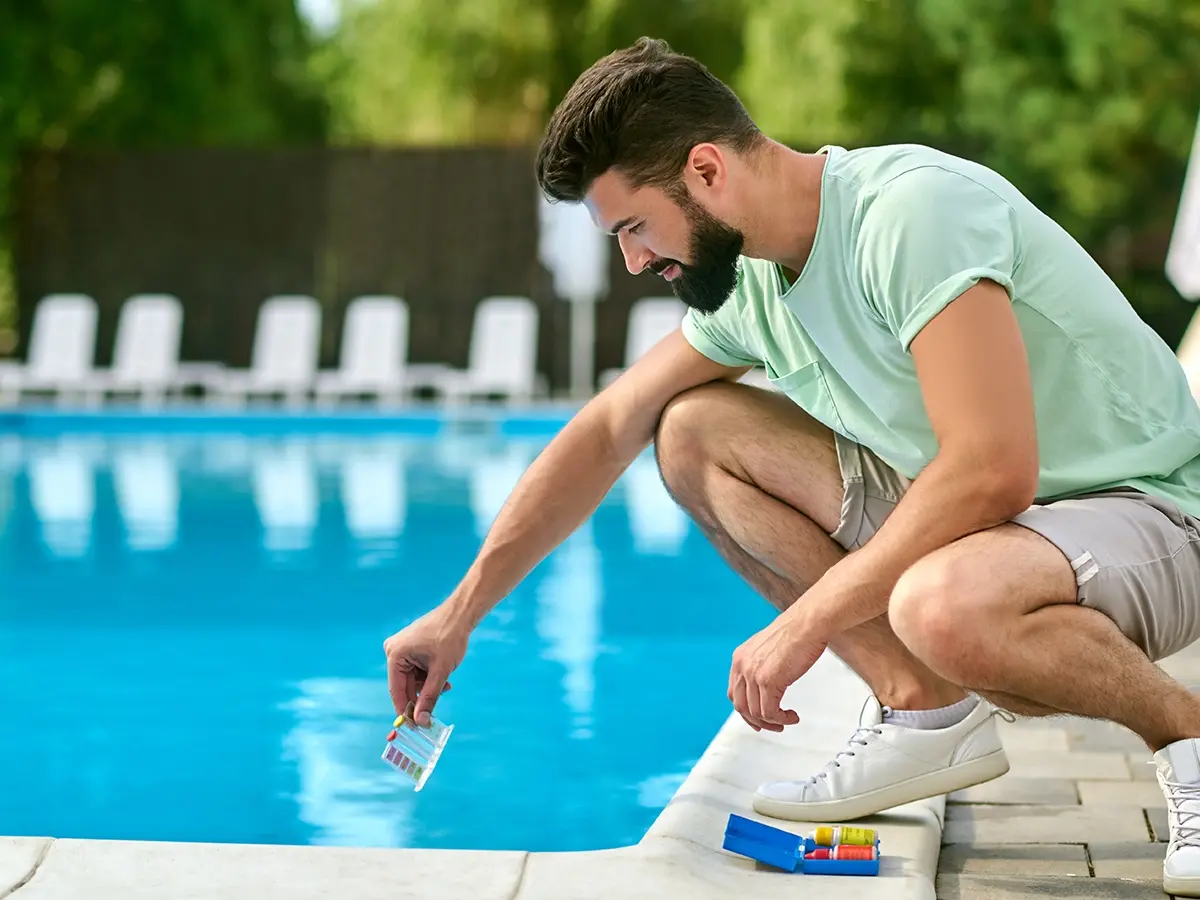
At minimum, you should be able to reliably test free chlorine and pH. A more complete kit should also allow you to monitor total alkalinity, calcium hardness, and cyanuric acid (CYA).
And don't treat each result as an isolated number. Pool chemistry is interconnected. For example, the amount of free chlorine needed in an outdoor pool depends heavily on how much CYA is present, and your water's ideal calcium hardness level depends on finish type and water temperature.
Test Before You Treat: Consistent testing is more valuable than constantly adding chemicals. Know what the water actually needs before making an adjustment.

Chlorine is the pool's primary sanitizer, and liquid sodium hypochlorite is one of the simplest ways to add it.
Liquid chlorine raises free chlorine without adding cyanuric acid or calcium hardness. That makes it particularly useful when you want to control chlorine independently without continuously increasing other chemistry.
The important thing is knowing your pool volume and testing before you dose. More chlorine isn't automatically better—the goal is maintaining the appropriate sanitizer residual for the conditions in your pool.
Protect Your Chlorine: Liquid chlorine naturally loses strength over time, and heat accelerates that degradation. Store it in a cool, shaded, well-ventilated location away from incompatible chemicals and use fresh product whenever possible.
A dedicated measuring cup or graduated container makes chemical dosing much more precise than guessing.
Before adding anything, know your approximate pool volume and calculate the amount required to make the intended change. Even a good water test won't help much if the dose that follows is just a guess.
Keep measuring equipment dedicated to pool use, and never interchange containers between incompatible chemicals.
Measure, Don't Guess: Pool chemical doses are based on water volume and the change you're trying to make. A calculated dose gives you a predictable adjustment and makes the next test result much more meaningful.
DIY pool maintenance means handling concentrated chemicals, so personal protective equipment belongs in the toolbox too.
Chemical-resistant gloves and appropriate eye protection are inexpensive compared with the consequences of a splash. Some chemicals also require attention to ventilation. Muriatic acid, for example, can release highly irritating and corrosive hydrogen chloride fumes, especially when concentrated. Avoid breathing the fumes, handle it outdoors or in a well-ventilated area, and never lean directly over an open container. Always follow the product label for handling and protective equipment.
Proper storage matters too. Keep pool chemicals in their original containers, in a cool, dry, well-ventilated location, and separate incompatible chemicals.
Safety First: Never mix pool chemicals together. Muriatic acid and chlorine products are especially dangerous when combined because they can release toxic chlorine gas. Measure and add products separately according to their labels, and never use the same measuring container for chlorine and acid.
One of the most useful pool-maintenance tools may already be attached to your equipment.
Your filter pressure gauge gives you information about what's happening inside the circulation system. Rather than cleaning a filter according to an arbitrary calendar schedule, learn the normal clean-filter pressure for your specific pool and watch for meaningful changes.
A significant increase can indicate that the filter is loading with debris, while unusually low pressure or poor return flow can point toward other circulation problems.
Pool Owner Tip: Write down your pressure immediately after cleaning the filter. That's your baseline—not somebody else's number from the internet.
You don't have to do every chemical calculation in your head.
A good pool calculator uses your pool volume and current test results to determine how much chemical is needed to reach a target. This can make adjustments more precise and help prevent the common DIY mistake of repeatedly adding small amounts of different products without understanding what each addition is doing.
HASA's Pool Chemical Calculator can help calculate chemical doses based on your pool's actual volume and test results.
Pool Owner Tip: A calculator is only as accurate as the information you give it. Get your pool volume and test results right before worrying about the exact dose.
Owning the right tools makes pool maintenance easier, but the routine matters even more.
Test your water consistently and make chemical adjustments based on the results rather than a fixed calendar. Skim and vacuum debris before asking chlorine to oxidize it. Brush areas with limited circulation, monitor your filter's normal operating pressure, and make sure the circulation system is moving enough water to properly distribute sanitizer and support filtration.
Most importantly, don't assume a pool needs to be “shocked” every week simply because another week has passed. If free chlorine is being maintained appropriately and the water is clear and sanitary, routine superchlorination may not be necessary. Respond to what the water is telling you.
Products such as enzymes, phosphate removers, clarifiers, and algaecides can also be useful when they solve a specific problem. But they aren't automatically required in every pool. Understanding why you're adding a product is one of the biggest differences between maintaining a pool and simply adding chemicals to one.

The best DIY pool owners aren't necessarily the ones with the most products on the shelf. They're the ones who know what normal looks like for their pool.
Know your typical filter pressure. Understand approximately how much water your pump moves. Learn how quickly your pool normally consumes chlorine. Know your CYA level and how it affects your chlorine target. Pay attention to where debris collects and where algae tends to appear.
Once you establish those baselines, problems become much easier to recognize—and usually easier to correct before they become expensive.
Start with good tools, test before you treat, and let the condition of the pool determine what it actually needs.
Why the Best Water Comes from a True Partnership
Taking Pool Care from the Classroom to Designing Spaces Every once in a while, an opportunity comes along that reminds me exactly why I enjoy this...