
How Pool Care Professionals Solve Problems Like Detectives
When most people picture a pool service visit, they imagine a quick skim, a chemical top-off, and a wave goodbye. But anyone who’s watched real pool...

Pool Products
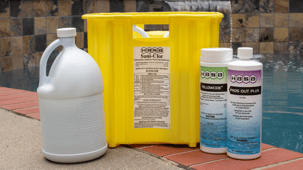
HASA has the chlorine, algaecides, and sanitizers you need to keep your pool or spa clean and clear.
Hot Tub Products
Shop our full line of Hi-Temp spa care products, including Eco-Safe Clarifiers and pH Increasers.
Performance Products
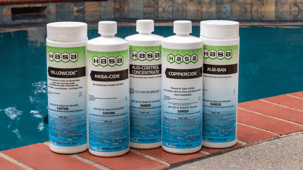
Our eco-friendly water treatments are science-backed and purposefully focused.
Mini-Bulk Program
We deliver a premium 12.5% sodium hypochlorite solution for sanitizing commercial pools and large-scale water systems.
6 min read
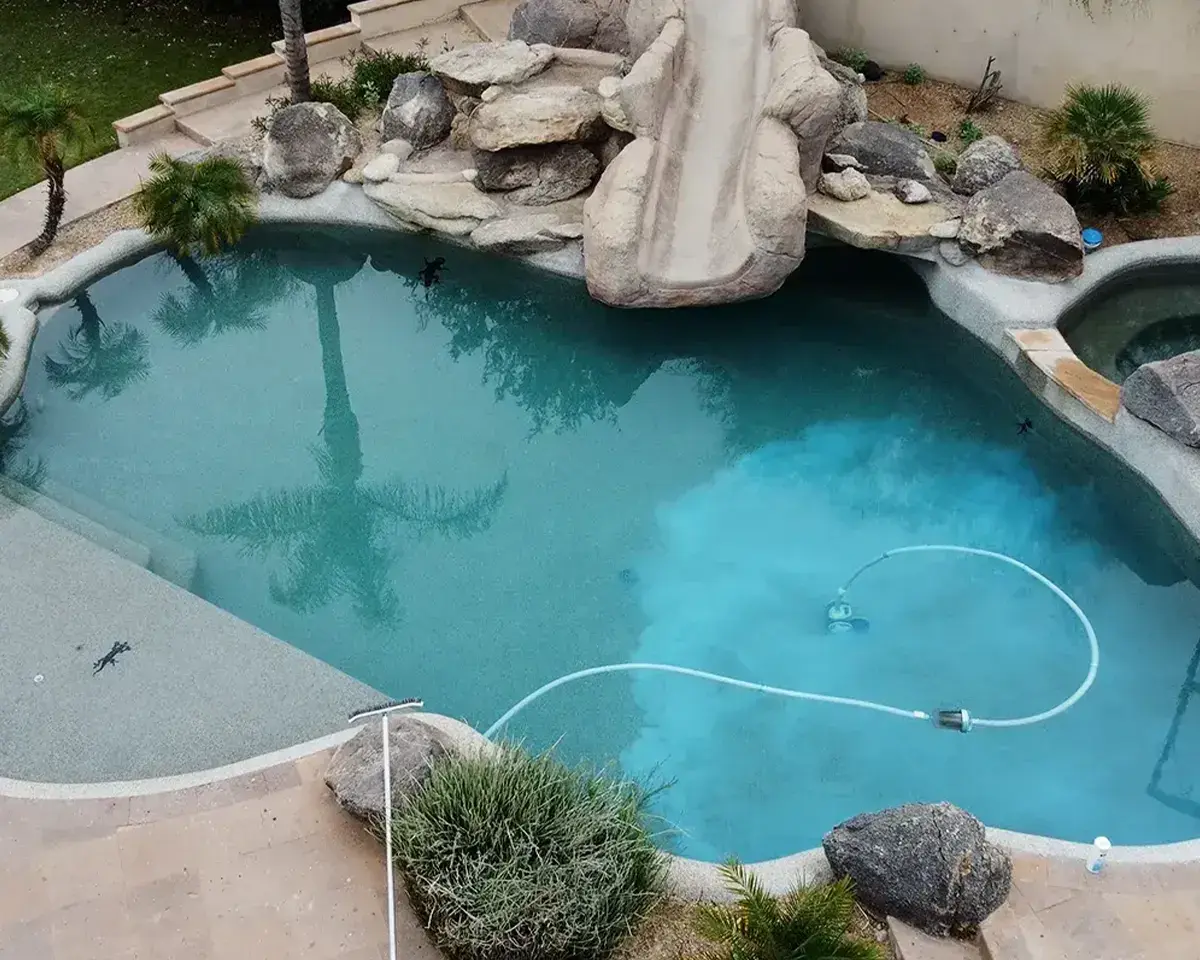
Has your pool ever looked perfectly fine one week and suddenly become harder to manage the next? Water chemistry can change, water clarity can become harder to maintain, and your usual maintenance routine may not seem to hold as well. When troubleshooting these changes, phosphate levels are one of many water chemistry parameters worth understanding.
Phosphates are a common (and often misunderstood) part of pool water chemistry. The term phosphate refers to a family of phosphorus-containing compounds that can exist in several forms. In swimming pool water, these can include orthophosphates, condensed phosphates such as polyphosphates, and other phosphorus-containing compounds.
Phosphates are omnipresent in our world. While they occur naturally in the environment, they can also enter swimming pools through everyday sources like fill water, fertilizers, cleaning products, and even some pool chemicals.
Natural sources of phosphate can be found in soil, rock, rivers, lakes, and oceans. The United States is, in fact, one of the largest producers of phosphate rock. Phosphate compounds can also be found in detergents, hair care products, fertilizers, foods, beverages, and many other products we encounter every day.
Two common sources of phosphates in pools are tap water and certain metal-sequestering products containing phosphoric acid or phosphonate compounds. Pools located near agricultural areas or environments with heavy fertilizer use may have additional sources of phosphate entering the water. Because phosphates are so common, understanding their source and monitoring their concentration can be useful parts of a pool maintenance program.
Understanding where phosphates come from, the different forms that can be present, and how they are measured is the first step toward properly managing phosphate levels in swimming pool water.
The water that you use to fill the pool can be a substantial source of phosphates. Drinking water utilities sometimes use phosphate-based corrosion control treatments to help reduce corrosion and the release of metals such as lead and copper from distribution and plumbing systems.
Orthophosphate compounds are commonly used for this purpose. When phosphate-based corrosion control is used by the local water supplier, measurable orthophosphate can therefore enter the swimming pool directly through the fill water.
This is one reason two pools in different locations can have very different phosphate concentrations even when they are maintained in similar ways.
It is also important to understand that phosphates exist in many different forms. Orthophosphate is the simplest form and is the form most commonly measured by swimming pool phosphate tests. Other forms include condensed phosphates, such as polyphosphates and metaphosphates.
Pools may also be exposed to phosphorus-containing compounds through products such as certain metal sequestrants. Some of these compounds can change or break down over time, contributing to the different forms of phosphate present in the water.
Certain pool chemicals and cleaning products may also contain phosphate compounds. Continued use of these products, combined with phosphate introduced through fill water and the surrounding environment, can contribute to phosphate accumulation over time.
What happens when phosphates end up in swimming pool water? This has been debated throughout the pool industry for years, partly because phosphate concentration is only one piece of a much larger water chemistry picture.
A phosphate reading by itself does not tell you whether a pool is properly sanitized, balanced, or being adequately filtered and circulated.
A pool can contain elevated phosphate levels while still maintaining clear, properly sanitized water. Likewise, a low phosphate reading does not guarantee good water quality if chlorine, CYA, circulation, filtration, or water balance are not being properly maintained.
This is why phosphate management should be kept in perspective.
The fundamentals of pool care remain the same: maintain an appropriate sanitizer residual, manage CYA, maintain balanced water according to the Langelier Saturation Index (LSI), provide adequate circulation and filtration, and routinely remove contaminants from the pool.
Phosphate testing simply provides another piece of information about what is present in the water. Once the concentration and potential sources are understood, pool owners and professionals can determine whether phosphate reduction should become part of their overall maintenance program.
Salt chlorine generators are designed to produce free available chlorine (FAC) from chloride in the water. Their ability to maintain an adequate chlorine residual depends on several factors.
Water temperature, sunlight, cyanuric acid (CYA), bather load, organic contamination, circulation, equipment sizing, pump run time, and the generator's output setting can all influence how much chlorine a pool produces and requires.
Phosphate concentration is another water chemistry parameter that can be monitored in a salt pool, but it should not be used by itself to diagnose the performance of a salt chlorine generator.
If a salt pool struggles to maintain its desired FAC residual, evaluate the complete system. Confirm proper chlorine production, CYA, circulation, filtration, water temperature, equipment sizing, run time, and overall water chemistry before focusing on any single parameter.
As stated earlier, phosphate can be present in several forms. In pool water, condensed phosphate compounds can break down or hydrolyze over time into orthophosphate.
When we're testing pool water for phosphate, most common pool test kits are primarily measuring orthophosphate. This is important because a test result may not represent every phosphorus-containing compound present in the water.
As part of routine pool maintenance, phosphate testing can be useful for establishing a baseline and monitoring changes over time.
If a pool has already turned green, phosphate testing should not be the first step. Address the existing water condition first using an appropriate EPA-registered sanitizer, such as liquid chlorine, along with proper circulation, filtration, and cleaning.
Once the water is clear and the pool has returned to normal operating conditions, phosphate levels can then be evaluated as a separate water chemistry parameter.
Learn more with Orenda's Clean to Green procedure.
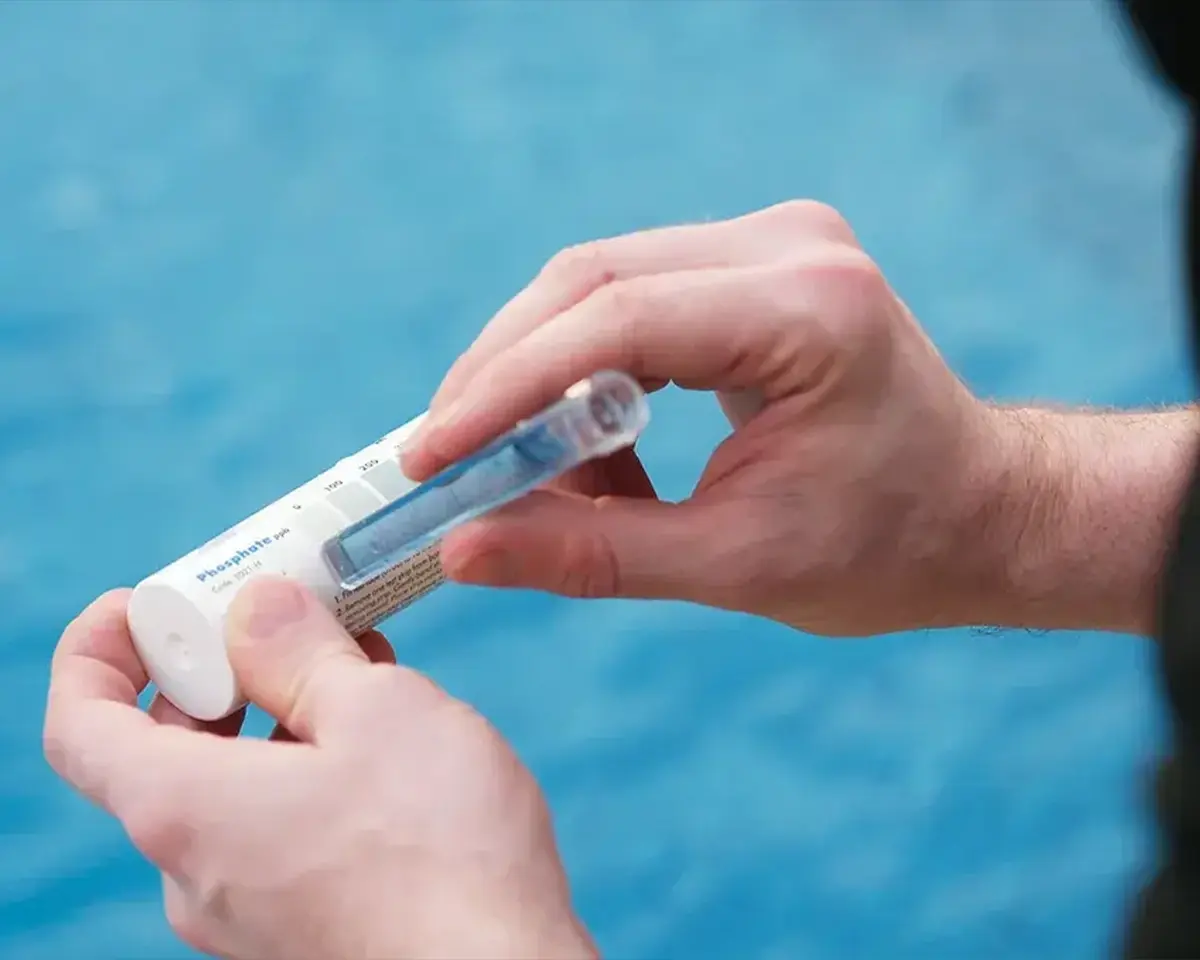
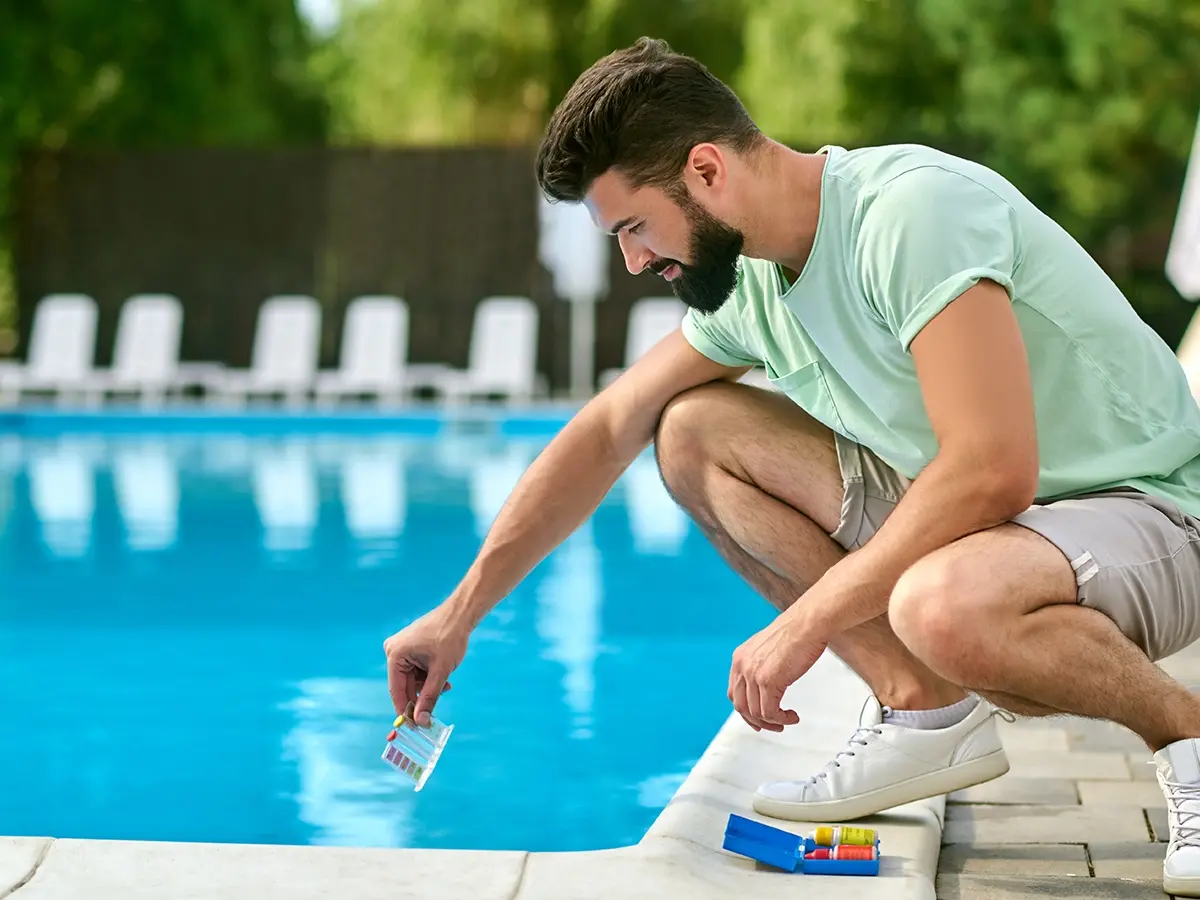
Phosphates are measured in parts per billion (ppb) using phosphate test kits or liquid reagent tests. Some test strips can provide a quick estimate, but more precise kits are recommended when an accurate reading is needed, especially at higher levels.
For best results:
Because phosphates can be introduced through fill water, it's also a good practice to periodically test your source water. If phosphate levels repeatedly rise after dilution or topping off the pool, the fill water may be contributing to the increase.
Once accurate levels are confirmed, the next step is deciding how to manage them.
For those wondering how to get rid of phosphates in swimming pool water, phosphate-removal products are designed specifically to reduce phosphate concentrations in the water.
Orenda's PR-10,000 is a concentrated phosphate remover designed to react with phosphates in pool water so they can be removed through filtration.
When treating elevated phosphate levels, temporary cloudiness may occur as the treatment reacts with phosphate compounds in the water. Proper circulation and filtration are important during this process, and the filter may require cleaning afterward depending on the amount of material being removed.
One important limitation of phosphate testing is that common pool tests primarily measure orthophosphate. Other phosphate compounds may still be present even when an orthophosphate test reports a low reading.
For this reason, treatment decisions should consider the pool's history, source water, products being used, and previous phosphate test results rather than relying on a single number alone.
Always follow the PR-10,000 label for the proper dosage and application procedure.
Phosphate removal should also be considered separately from sanitation. PR-10,000 is a phosphate-removal product; maintaining the proper sanitizer residual remains an essential and separate part of pool care.
Ongoing monitoring can help determine how frequently phosphate treatment is appropriate. Every pool is different. Some pools receive very little phosphate from their environment, while others may continually introduce it through source water, landscaping, or certain pool products.
Rather than treating automatically on a fixed schedule, regular testing can help identify trends and determine when phosphate reduction is appropriate.
Use this checklist as part of your regular maintenance routine to better understand and manage phosphates in pool water:
Not sure what your phosphate levels mean? Use HASA’s Pool Chemical Calculator to guide your next steps with confidence.
When most people picture a pool service visit, they imagine a quick skim, a chemical top-off, and a wave goodbye. But anyone who’s watched real pool...
 HASA : Aug 01, 2025
For Precision-Minded Pool Owners, Guessing Isn’t Good Enough If you’re the kind of pool owner who prefers data over assumptions and consistency over...
Why the Best Water Comes from a True Partnership