

Skip to the main content

Pool Professionals
Professional-grade products. Expert support. Built for your business.


Pool Owners
Eco-friendly, easy-to-use solutions to keep your pool clean and clear.


Industrial
Efficient treatment & supply. Performance-focused operations support.


Municipal
Reliable solutions & delivery. Sustainable treatment for public systems.


Dealers
Help your pool & spa customers with trusted, professional-grade products.

IMG_2038-Enhanced-NR_PoolProducts

Pool Products
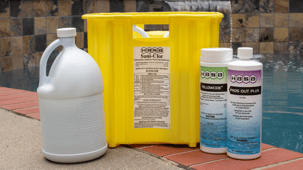
HASA has the chlorine, algaecides, and sanitizers you need to keep your pool or spa clean and clear.

IMG_1793-Enhanced-NR-SpaPHDecreaser

Hot Tub Products
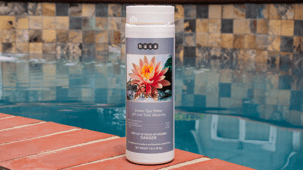
Shop our full line of Hi-Temp spa care products, including Eco-Safe Clarifiers and pH Increasers.

IMG_1971-Enhanced-NR_AncillaryProducts_Group

Ancillary Products
Our eco-friendly water treatments are science-backed and purposefully focused.

MiniBulk_16x9_LowRes

Mini-Bulk Program
We deliver a premium 12.5% sodium hypochlorite solution for sanitizing commercial pools and large-scale water systems.

Blog
Learn from water chemistry experts.


Training and Support
Meet our educational resources and support options


Safety Data Sheets
Download SDS sheets for HASA products.


Pool Chemical Calculator
Achieve balanced chemistry easily.

Liquid Chlorine For Pools
A service professional’s guide that's been made simple.


Orenda Academy
For water chemistry & professional pool management knowledge.


Events
Find HASA at an event near you.


Rewards
Explore our HASA loyalty rewards program.

Ask Crystal
Get live 24/7 water chemistry and pool care support.


Use the HASA Dealer Locator
See where our products are sold near you with this tool. 

About HASA
Learn about HASA's commitment via the returnable packaging model.

Careers
Explore open positions with HASA.

Column Headline
Column Headline
Column Headline
Column Headline

Pool Chemistry: The Complete Guide to Understanding and Balancing Your Pool Water

Proper pool chemistry is the foundation for safe, clean, and predictable pool care. The goal is water thar's safe for swimmers and balanced to protect pool surfaces and equipment. Reaching that requires more than keeping individual parameters within recommended ranges—it requires understanding how they interact.

Sanitizer level, pH, total alkalinity, calcium hardness, cyanuric acid (CYA), and temperature all influence how pool water behaves. Each play a distint role and do not operate in isolation. Adjusting one often affects the others, which is why pool professionals think in terms of overall water balance rather than chasing a single number.  The Langelier Saturation Index (LSI) brings several of these factors together to help evaluate water balance, while proper chlorine and CYA management are essential to effective sanitation.

Understanding these relationships allows pool professionals to move beyond reactive treatment and make proactive, informed decisions about the water they manage. This guide covers the fundamentals of pool chemistry, useful tools for managing water more effectively, and common mistakes worth avoiding.
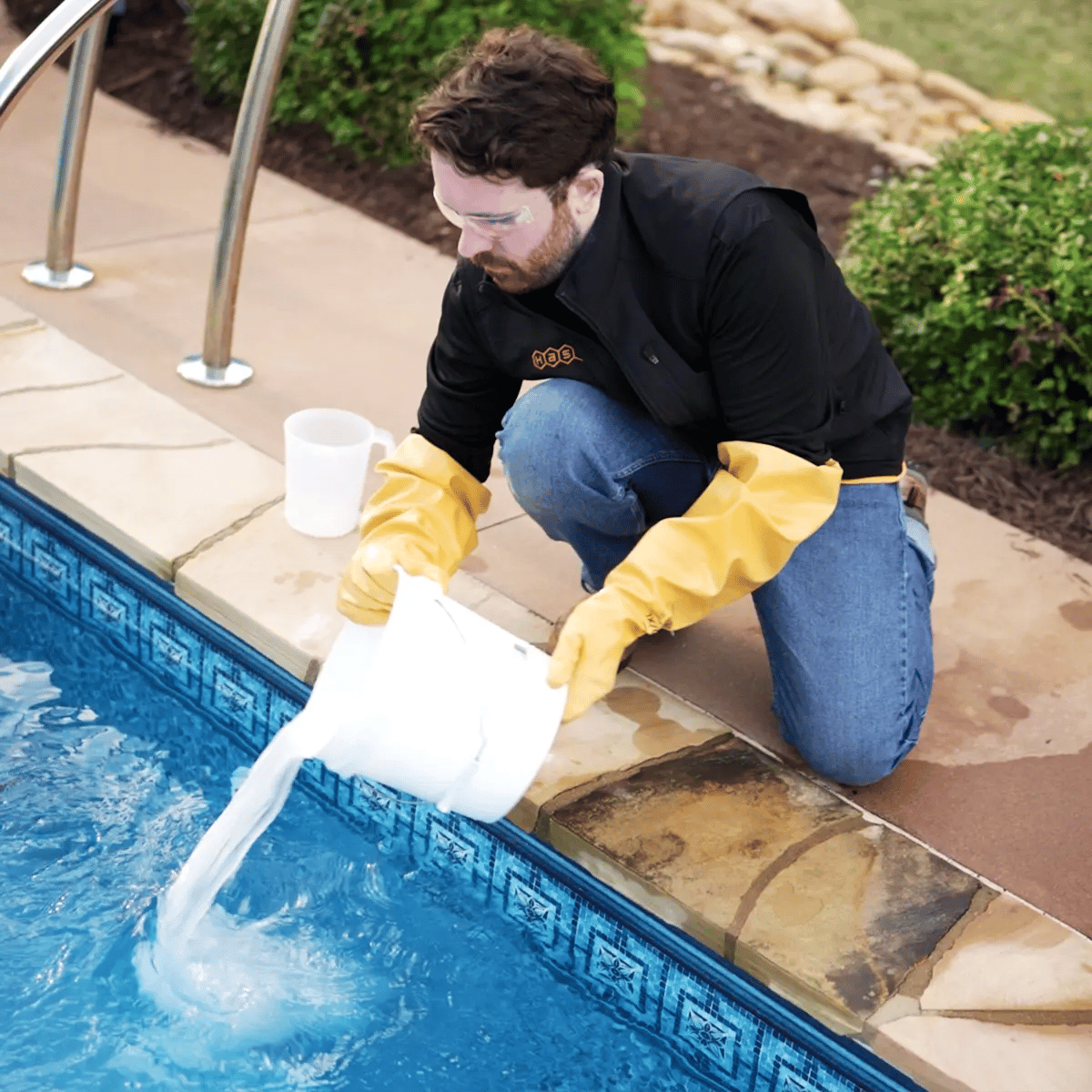

Pool Pro Rob_Adding Dry CHemical Mix to Swimming Pool

What Is Pool Chemistry? (Core Concepts Overview)

Pool chemistry is the ongoing management of several interconnected water parameters, including free chlorine, pH, total alkalinity, calcium hardness, cyanuric acid (CYA), total dissolved solids (TDS), salt when applicable, and borates when used. Each plays a different role in how pool water behaves.

Chlorine, including our preferred source, liquid chlorine (sodium hypochlorite), provides sanitation and oxidation to help keep water clean and safe. pH can influence comfort, water balance, and many chemical reactions in the pool. Total alkalinity provides resistance to changes in pH, while calcium hardness is an important component of calcium carbonate saturation and overall water balance. CYA protects chlorine from rapid degradation by sunlight, but it also moderates chlorine strength by holding it back. This makes the relationship between pH, free chlorine and CYA especially important when managing outdoor pools.

These parameters do not operate independently. Changing pH, alkalinity, calcium hardness, temperature, or TDS can change the Langelier Saturation Index (LSI), while changes in CYA influence the amount of free chlorine needed for effective sanitation and the cyanurate alkalinity concentration in the water. Understanding these relationships allows pool owners and professionals to manage the water as a system rather than chasing individual numbers.

New Pool Owner Basics

If you're brand new to pool ownership, HASA has resources that cover the fundamentals in more depth. Our Ultimate Guide to Pool Care for New Pool Owners walks through what to expect in your first season, while Easy Pool Care for Sparkling Water and 10 Essential Tools Every DIY Pool Owner Should Have offer practical, everyday guidance to help you get started.

Pool Chlorine Basics

Liquid chlorine is the most widely used pool sanitizer, but not all chlorinating products behave the same way once they hit the water. Stabilized chlorines such as trichlor and dichlor add CYA with every dose, allowing CYA to accumulate over time. Calcium hypochlorite adds calcium, which can increase calcium hardness. Liquid chlorine adds neither CYA nor calcium, allowing each of these parameters to be managed independently from routine chlorination.

That control can make water chemistry simpler and more predictable. And when a pool develops a strong “chlorine” odor or itchy, red eyes, free chlorine itself may not be the culprit. Combined chlorine compounds, including chloramines, can contribute to these familiar symptoms and indicate that contaminants in the water need to be addressed. For a deeper comparison of chlorinating products and the advantages of sodium hypochlorite, see our complete guide to liquid chlorine for pools.


Understanding Pool Water Balance and the LSI

Individual test readings only tell part of the story. The Langelier Saturation Index (LSI) is not another chemistry parameter to manage. It is a calculated index that shows how pH, carbonate alkalinity, calcium hardness, water temperature, and total dissolved solids (TDS) work together to determine the water’s calcium carbonate saturation.

An LSI between -0.30 and +0.30 is generally considered balanced. Above +0.30, water becomes increasingly oversaturated with calcium carbonate, increasing the likelihood of scale. Below -0.30, water becomes increasingly undersaturated and may seek calcium from cementitious pool surfaces, such as plaster and grout. The farther the LSI moves from balance, the stronger that tendency becomes.

This is why experienced pool professionals look beyond individual ranges and manage chemistry with the LSI in mind. Changing pH, alkalinity, calcium hardness, temperature, or TDS can shift the overall balance of the water. Understanding those relationships allows for more deliberate adjustments that help protect pool surfaces while keeping water chemistry predictable.

Pouring icon_DarkBlue-1
Brian, Cameron, & Joe

Founders / Coast 2 Coast Pools

“By utilizing advanced testing methods, monitoring the Langelier Saturation Index (LSI), and incorporating HASA's specialized products and treatment protocols, we proactively protect pool surfaces, extend equipment life, improve water clarity, and reduce long-term maintenance costs. Our philosophy is simple: when water chemistry is managed correctly, everything else works better. That's why we place such a strong emphasis on education, prevention, and delivering a level of service that exceeds our customers' expectations.”

ICONS_DarkBlue_JAN_Filled_80x80px_Recovered_-16
Terry Snow

Owner / TLS Pool Service

“HASA liquid sodium hypochlorite works great in my commercial pools. It also makes a very effective shock treatment for my residential pools.”

How to Use a Pool Chemical Calculator

Pool chemistry involves several interconnected factors, and calculating chemical doses by hand can be time-consuming and leaces room for error. A pool chemical calculator simplifies the process by using your pool volume, current test results, and desired adjustments to estimate chemical doses while showing how those changes can affect overall water balance. You don't have to run the math yourself to get this right.

To use HASA and Orenda's Pool Chemical Calculator, start by entering your pool volume and current water chemistry, including pH, total alkalinity, calcium hardness, CYA, temperature, and TDS. The calculatur's slides let you adjust the values to see how different changes affect the LSI and calculate the approximate amount of chemical needed to reach your targets. This makes the calculator more than a dosing tool—it allows you to plan chemistry adjustments before adding products to the water, helping reduce guesswork and avoid unnecessary overcorrections.

Key Pool Water Parameters to Manage (pH, Alkalinity, Calcium Hardness)

pH, total alkalinity, and calcium hardness are closely connected, and each contributes to overall water balance.


pH is one of the most influential factors in pool chemistry and the LSI. Generally, pH should be maintained within an acceptable range of about 7.2 to 7.8, though allowing pH to find its natural equilibrium can make water easier to manage. Rising pH is often driven by the loss of dissolved carbon dioxide (CO₂), which is accelerated by aeration. If pH needs to be reduced, our guide on how to lower pH in pool water safely walks through the process. We also teach how to rather contain pH instead of chasing it. 


Total alkalinity measures the water’s ability to resist changes in pH. Rather than chasing a universal target, alkalinity should be managed based on the needs of the pool, its pH behavior, and overall LSI balance. Higher carbonate alkalinity can also accelerate CO₂ loss and contribute to a faster rate of pH rise.


Calcium hardness is another important component of the LSI. The appropriate level depends on factors such as pool surface, temperature, pH, and alkalinity rather than a single universal target. Too little calcium can leave cementitious surfaces vulnerable when the LSI is negative, while excessive calcium can contribute to scale when conditions push the LSI too high.

Common Pool Chemistry Mistakes and Troubleshooting

Even experienced pool owners can fall into common pool chemistry mistakes. One is adding chlorine without considering how much is actually needed. Proper chlorination should account for factors like bather load, contamination, sunlight, and CYA. Allowing CYA to accumulate unchecked is another common problem. As CYA increases, more free chlorine is needed to maintain the same sanitizing strength, making the relationship between pH, free chlorine and CYA more important than either number alone.

Another common mistake is chasing individual readings without considering how they interact. Adjusting pH, alkalinity, or calcium hardness simply to reach a prescribed range can unnecessarily disrupt the LSI and lead to repeated chemical adjustments. Good water management looks at the pool as a system and makes intentional changes based on what the water actually needs.  More on Solving for Combined Available Chlorine in Pools.

If a pool develops a strong “chlorine” odor or causes swimmer irritation, combined chlorine compounds, including chloramines, may be involved. These compounds form as chlorine reacts with nitrogen-containing contaminants and can contribute to unpleasant odors and irritation. Identifying and addressing the source of chlorine demand is more effective than simply adding chemicals based on a single reading.

Pool Chemical Safety: Handling and Storage

Pool chemicals such as liquid chlorine and muriatic acid require careful handling, storage, and transportation. Many pool chemicals are incompatible with one another and should never be mixed or allowed to come into contact. Store chemicals in their original containers in a cool, dry, well-ventilated area, protected from direct sunlight and physically separated from incompatible products.

When handling or diluting any pool chemical, follow the product label and manufacturer instructions, use appropriate personal protective equipment (PPE), and never combine different chemicals. When transporting products, keep containers upright, properly secured, and separated from incompatible materials to help prevent spills or accidental contact.

Always review the product label and relevant Safety Data Sheet (SDS) for specific handling, storage, first-aid, and safety information before working with an unfamiliar product.

How to Know When DIY Testing Isn't Enough

Homeowners often ask whether they should manage pool chemistry themselves or work with a professional. The answer depends on their comfort with routine testing, willingness to learn, and the complexity of the pool. With reliable testing and a solid understanding of water chemistry, many homeowners can successfully maintain their own pools. When problems such as recurring algae, cloudy water, or difficult-to-manage chemistry persist, however, an experienced pool professional can provide more advanced testing, troubleshooting, and a consistent maintenance strategy.

For service professionals, that expertise is an important part of the value you provide. Professional pool care is not simply about adding chemicals—it is about understanding how the water behaves, recognizing problems early, and making informed adjustments that keep chemistry predictable over time.

Before you go, explore HASA’s pool chemistry resources. Use the Pool Chemical Calculator to calculate chemical doses and model water balance, explore our LSI guide to better understand calcium carbonate saturation, or read the Liquid Chlorine Guide to learn more about your chlorination options.

Download Our Free Water Chemistry Guide


Take your knowledge further with HASA’s free resource: Mastering Pool Water Chemistry. This guide covers key principles of water balance, the science behind chlorination in water treatment, and practical tips to reduce callbacks and deliver better results for clients.
MasteringPoolWaterChemistry_CoverImage

Pro Tip

Always test before you treat.
Liquid chlorine is most effective when pH and alkalinity are balanced. Apply during active circulation, and use breakpoint chlorination techniques to ensure clean, safe water with no chloramine buildup.

Looking for info on more than just pools? HASA is a leader in water treatment chemicals.

Pool Chemistry: Frequently Asked Questions

What Pool Pros Are Really Asking About Water Balance


Q: Why does my pool smell strongly of chlorine if the levels test low?
A: A strong chlorine smell is usually a sign of chloramines, not too much chlorine. Chloramines form when chlorine binds with contaminants like sweat, sunscreen, and urine, and they're what actually cause the smell and eye/skin irritation people blame on chlorine itself. The fix is breakpoint chlorination, not backing off your sanitizer.


Q: What's the difference between liquid chlorine and chlorine tablets?
A: Liquid chlorine (sodium hypochlorite) doesn't add cyanuric acid (CYA) to the water, so it gives you independent control over sanitizer and stabilizer levels. Tablets (trichlor) add CYA with every dose, which builds up over time and can eventually block chlorine's effectiveness, a problem liquid chlorine avoids.


Q: Do I really need to track the Langelier Saturation Index (LSI), or is testing pH, alkalinity, and calcium hardness enough?
A: Testing each parameter individually tells you if a single reading is off, but the LSI tells you how those readings work together. Two pools can have "acceptable" individual numbers and still have scaling or corrosion problems if the LSI is out of range. For long-term equipment and surface protection, LSI is the more complete check.


Q: Is "shock" a specific product I need to buy?
A: No. Shock is an action, oxidizing the water to break down contaminants, not a product category. It's most often done with liquid chlorine at a higher dose. Relying on dichlor or cal-hypo for routine shocking adds unnecessary CYA or calcium over time.


Q: Why did my pool water problem come back after I treated it?
A: Recurring issues usually mean an underlying imbalance is being masked rather than fixed, most often pH, alkalinity, or CYA drifting out of range and pulling other readings off with it. Treating the symptom (cloudy water, algae) without correcting the root parameter is why the same problem resurfaces visit after visit.