Why Is My Pool Green? How to Clean and Prevent Algae Naturally
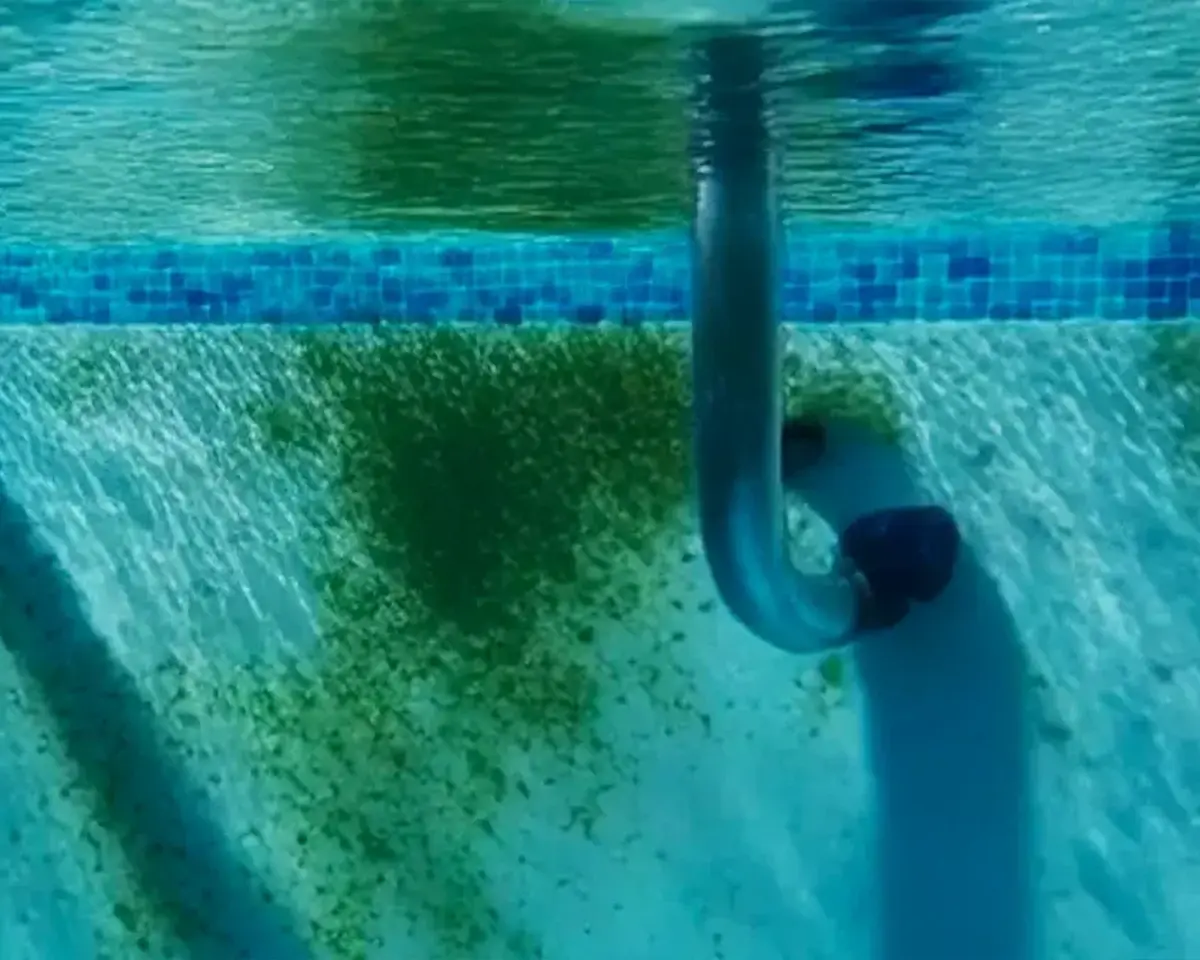
Few things are more frustrating than watching your pool water shift from clear blue to murky green. The culprit? Algae. These microscopic organisms...

Pool Products
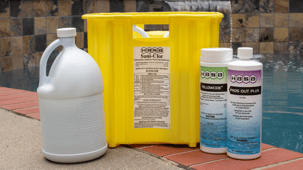
HASA has the chlorine, algaecides, and sanitizers you need to keep your pool or spa clean and clear.
Hot Tub Products
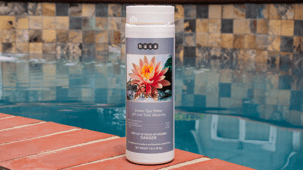
Shop our full line of Hi-Temp spa care products, including Eco-Safe Clarifiers and pH Increasers.
Performance Products
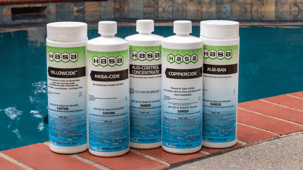
Our eco-friendly water treatments are science-backed and purposefully focused.
Mini-Bulk Program
We deliver a premium 12.5% sodium hypochlorite solution for sanitizing commercial pools and large-scale water systems.
6 min read
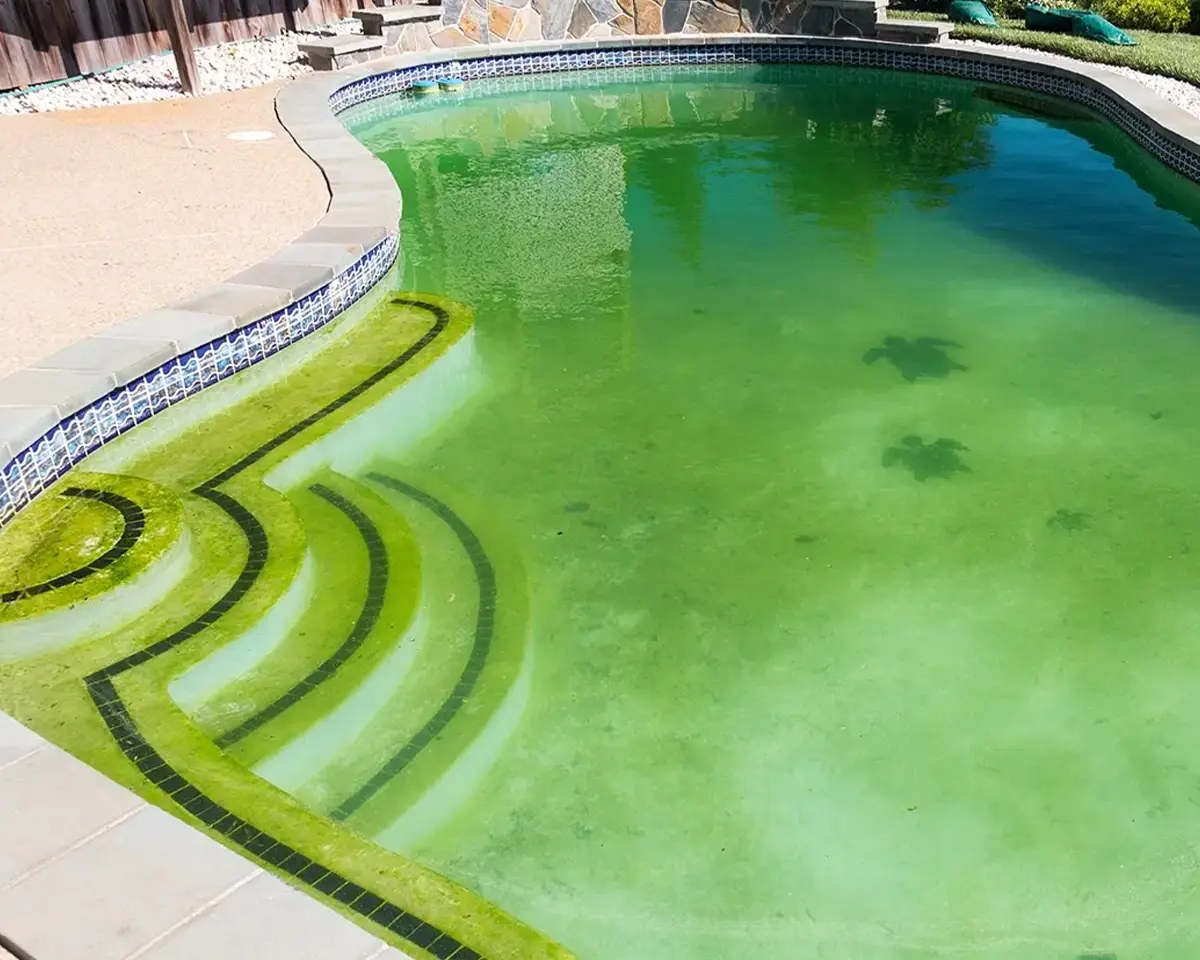
Every pool owner knows the frustration: your water looks good one day, and the next day green spots appear on the walls, steps, and corners. Algae can infiltrate almost any pool even when chlorine levels test “perfect.”
This is because algae does not appear fully grown. It arrives in microscopic form as spores carried by wind, rain, swimmers, animals, and even on pool equipment. Once a spore enters a wet surface with light and nutrients, it can colonize rapidly. Under favorable conditions, a single algal cell can multiply into millions in less than 24–48 hours.
Unlike contaminated lakes or stagnant ponds—where algae is expected because water is uncirculated, unfiltered, nutrient-rich, and unchlorinated—a swimming pool constantly fights a losing battle against new biological introductions. One of the most important lessons to learn in pool maintenance for beginners is that pools are not “sterile.” They are merely regulated by pool water treatments.
If the disinfectant residual is overwhelmed by contamination, shielded inside biofilms, weakened by pH or CYA imbalance, or slow to respond, algae gains a foothold. This is when understanding basic water treatment chemistry matters. Algaecides are not a replacement for chlorine—they are a secondary tool used when the biological load exceeds what chlorine can handle in real time.
Chlorine can prevent algae on its own—but only when enough of it is present in its free, active form. This is an important concept in pool water treatment, and one that often causes confusion for those newer to pool maintenance.
When chlorine is added to a pool, it immediately starts reacting with contaminants like sweat, sunscreen, leaves, dirt, pollen, and other organic material. As it does this work, free chlorine is consumed and converted into combined chlorine. Most test kits will show you the pool’s total chlorine reading, and it’s important to understand that this isn't the whole picture.
This is why a pool can test “within range” yet still develop algae. The chlorine hasn’t disappeared, but it’s no longer as effective. From a water treatment chemistry standpoint, the issue isn’t the total chlorine level, but how much of that chlorine is still available to disinfect and oxidize biological threats.
If combined chlorine rises faster than free chlorine is replenished, algae can begin to establish itself. At that point, the pool environment becomes far more favorable to algae growth, even though the numbers on a test strip may look acceptable.
Chlorine efficiency is also heavily influenced by stabilizer (CYA) and pH—two core factors in pool water treatment that directly impact how well chlorine performs.
CYA is added to protect chlorine from being destroyed by sunlight. However, it also binds the majority of chlorine in the water, placing it into a reserve state. With typical CYA levels of 30–50 ppm, roughly 97% of chlorine is bound, leaving only a small fraction immediately active.
.png?width=1920&height=1080&name=HOCl%20vs%20OCl%20at%20different%20CYA%20values%20(1).png)
pH further affects this balance. At a normal pool pH of around 7.5, only about half of that already-limited active chlorine exists in its most effective killing form, hypochlorous acid (HOCl). The remainder shifts into hypochlorite ion (OCl⁻), which is significantly weaker.
This explains a common frustration: algae can grow even when chlorine, pH, and stabilizer all appear to be “in range.” The active chlorine concentration may simply be too low to respond quickly enough to new biological contamination.
This is also why periodic shocking plays an important role. If chlorine levels remain static week after week, algae can adapt to the environment. A strong chlorine shock disrupts that balance, restoring oxidizing power and preventing algae from becoming established.
One of the most important lessons in pool maintenance is that a good test result is only a snapshot in time. A pool can have adequate free chlorine when you test it and still experience significant chlorine demand from swimmers, storms, debris, or other contamination later that day.
During periods of heavy use or environmental contamination, chlorine demand can exceed the rate at which sanitizer is being replenished, causing free chlorine to fall below its target. Poor circulation, accumulated debris, rough surfaces, and difficult-to-brush areas can further create localized conditions where algae can become established.
That does not mean every pool needs an algaecide. Proper chlorine management relative to CYA remains the primary defense against algae. Algaecides are supplemental tools that can provide additional control when conditions warrant it—for example, recurring algae problems, seasonal closures, difficult-to-treat areas, or a specific outbreak for which an algaecide is labeled.
To understand when algaecides are useful, it helps to understand what they actually do at a chemical level. Algaecides are not primary sanitizers in the same way chlorine is. They do not provide the broad oxidation and disinfection that chlorine provides, nor do they eliminate the organic contamination that creates chlorine demand. Instead, they use different chemical mechanisms to kill, control, or inhibit algae.
Most algaecides fall into a few broad chemical categories. Quaternary ammonium compounds (often called “quats”) disrupt cell membranes, damaging algae cells directly. Polymeric quats (polyquats) work through similar interactions but are generally non-foaming and behave differently in the water, although high chlorine concentrations can oxidize the polymer. Metal-based algaecides, most commonly copper-based products, release metal ions that interfere with essential cellular processes in algae. Specialty formulations may use entirely different chemistry and should always be applied according to their specific product labels.
What these products have in common is that they provide another mechanism for controlling algae beyond chlorine alone. Some are best suited for preventative or maintenance applications, while others are specifically labeled to treat existing algae outbreaks. Their effectiveness, application order, and limitations depend on the active ingredient, which is why not all algaecides should be treated or applied the same way.
This distinction matters for pool maintenance beginners. A common mistake is adding an algaecide after visible algae has taken over the pool and expecting the product to clear the water on its own. Even when an algaecide kills or controls the algae, the pool still needs adequate chlorine, brushing, circulation, and filtration to complete the cleanup and remove the remaining contamination. Algaecides can be valuable supplemental tools, but they do not replace proper chlorination.
From a pool water treatment perspective, algaecides are best viewed as supplemental tools. Some are well suited for preventative maintenance, while others are specifically formulated to help control existing algae. In either case, they provide an additional mechanism of algae control rather than replacing proper sanitizer management.
Algae can become established when free chlorine falls below its appropriate level relative to CYA, particularly when chlorine demand increases from heavy swimmer use, storms, debris, or other contamination. Poor circulation and protected areas can create additional challenges by limiting sanitizer distribution, while rough or porous surfaces can provide places for certain types of algae to become more firmly established.
Algaecides can help address these conditions in different ways depending on their chemistry. Some damage algae cells directly, some provide longer-lasting control in the water, and specialty treatments may be designed to target persistent growth or maintain direct chemical contact with affected surfaces. This can make them useful for recurring problem areas, seasonal applications, or as part of a targeted algae treatment.
However, algaecides aren’t without limits. Improper product selection or overuse can contribute to foaming, staining, metal accumulation, increased chlorine demand, or other unwanted side effects. This is why dosage, timing, active ingredient, pool surface, and treatment sequence all matter when selecting and using an algaecide.
For beginners, the key takeaway is simple: algaecides are supplemental, not foundational. A properly maintained pool with adequate free chlorine relative to CYA, effective circulation and filtration, and routine brushing may not need a routine algaecide at all.
When an algaecide is appropriate, choose it intentionally. Consider the type of algae, pool surface, existing water chemistry, and the active ingredient in the product. Quats can foam, copper products can contribute to staining if mismanaged, and some specialty treatments significantly change the chemistry of the water.
Rather than automatically reaching for an algaecide whenever algae appears, first ask why the algae was able to establish itself. Correct the underlying condition, then use the appropriate supplemental treatment when it provides a specific benefit.
It’s important to understand that algae problems are rarely caused by a single mistake. They usually develop when multiple aspects of water chemistry are out of balance.
At a minimum, pool owners should:
A well-balanced pool may never need an algaecide. But in practice, most pools benefit from having one available as a backup. When used correctly and at the right time, algaecides help support chlorine, reduce downtime, and keep water clean, clear, and manageable throughout the season.
Learn more about water chemistry, testing, and regular maintenance with HASA. Try our Pool Chemical Calculator and achieve perfectly balanced water today.
Author: Terry Arko
Terry Arko brings more than 40 years of experience in the recreational water industry and currently serves as Technical Content and Product Training Consultant for HASA Pool, makers of HASA Sani-Clor. His career spans service and repair, retail sales, chemical manufacturing, technical service, commercial sales, and product development—giving him a uniquely comprehensive perspective on water chemistry from both the field and the lab.
A respected educator and thought leader, Terry has written over 200 published articles on water chemistry and has been teaching chemistry-focused courses for more than 30 years. His ability to translate complex science into practical, real-world understanding has made him a trusted resource for pool professionals seeking safer, smarter, and more consistent water care.
Terry is a Certified Pool Operator (CPO) Instructor with the Pool & Hot Tub Alliance (PHTA) and serves on the Recreational Water Air Quality Committee (RWAQC). In 2025 he was presented the Pool Nation Lifetime Achievement Award. Terry is driven by a lifelong commitment to education, innovation, and advancing industry standards through knowledge.
Few things are more frustrating than watching your pool water shift from clear blue to murky green. The culprit? Algae. These microscopic organisms...

Are You Ready? The official start of summer may be Memorial Day weekend; however, the start of pool season can be as unpredictable as the weather....