Want to Get a Pool? Read This Before You Buy
 HASA : Sep 23, 2025
The Smart Way to Own a Pool: Safe, Clean, Clear Confidence A swimming pool isn’t just a backyard feature — it’s an investment in your family’s...

Pool Products
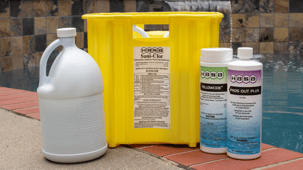
HASA has the chlorine, algaecides, and sanitizers you need to keep your pool or spa clean and clear.
Hot Tub Products
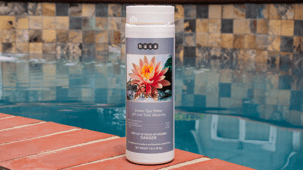
Shop our full line of Hi-Temp spa care products, including Eco-Safe Clarifiers and pH Increasers.
Ancillary Products
Our eco-friendly water treatments are science-backed and purposefully focused.

Mini-Bulk Program
We deliver a premium 12.5% sodium hypochlorite solution for sanitizing commercial pools and large-scale water systems.
9 min read
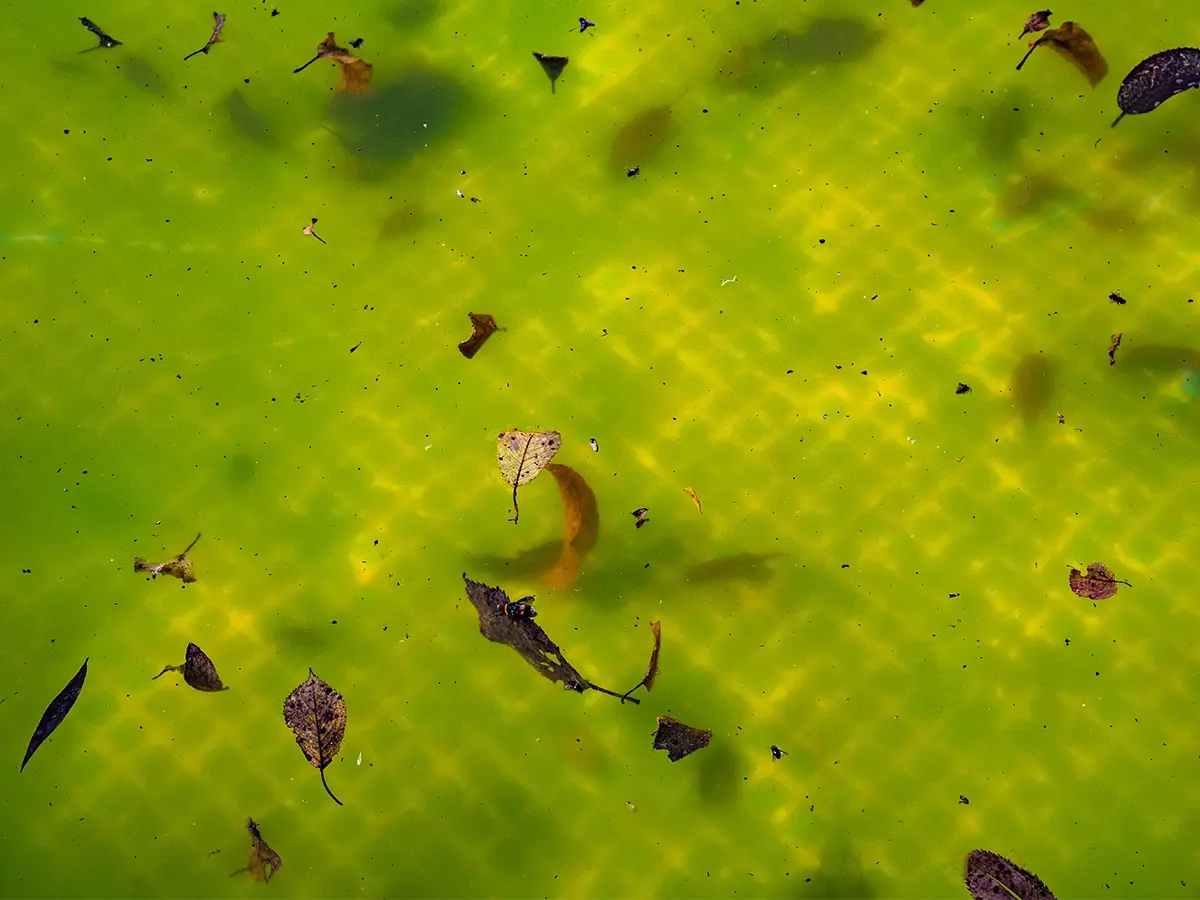
This guide is written for pool service professionals, commercial pool operators, and pool owners who need to manage water quality with confidence. Understanding how to identify and treat algae correctly is essential for keeping your pool safe, clean and clear. This guide breaks down the main types of algae, how to identify them, how to treat them and how to prevent them through routine maintenance and balanced water chemistry.
Identifying the problem correctly is often more important than the treatment itself. One of my favorite moments in a CPO or PCTI class is when someone looks at a pool photo and confidently says, “That’s not black algae.” At that point I know the training has clicked. Identifying the problem correctly is often more important than the treatment itself. Every green spot is not black algae, every yellow stain is not mustard algae, and sometimes what looks like algae isn't algae at all. The better we become at reading the clues, the faster we solve the problem.
Green algae is the most common and easiest to eliminate. Mustard algae prefers shaded areas and contaminated accessories. Black algae is actually a cyanobacteria that anchors itself into porous plaster. Pink 'algae' is not algae at all but a bacterial biofilm that requires aggressive cleaning.
Algae spores enter nearly every pool through wind, rain, swimmers, pets and debris. Healthy pools prevent those spores from establishing themselves. Low sanitizer, poor circulation, biofilm, dirty filters, heavy bather loads and neglected brushing create ideal conditions for growth.
Now that we've covered why algae appears, let's look at how to identify and treat each type.
Test and balance the water, brush thoroughly to expose algae to chlorine, vacuum debris, and keep the pump and filtration system running throughout the cleanup. For an active green algae outbreak, free chlorine may need to be raised to approximately 40% of the CYA level. Maintain the appropriate chlorine level while continuing to brush, vacuum, and clean or backwash the filter as needed until the algae is eliminated and the water is clear.
Algaecide Considerations: Algaecides can supplement chlorine, but treatment order depends on the chemistry of the product. Some algaecides and chlorine-activated treatments are designed to be added before a high chlorine dose, while others can be degraded or consumed by high chlorine concentrations. Always follow the product label for dosage, contact time, and treatment sequence.
A Polyquat 60 algaecide is especially useful for supplemental algae control, prevention, and seasonal closures. Because elevated chlorine can oxidize Polyquat, avoid adding it immediately before or during a high-chlorine treatment unless directed by the product label. Polyquat should complement—not replace—maintaining the proper free chlorine level relative to CYA.
Appearance: yellow to brownish-yellow dusty deposits on shaded walls, behind ladders and on accessories.
Treatment: The fundamentals are similar to treating green algae: maintain adequate chlorine, brush thoroughly, circulate and filter continuously, and physically remove dead algae. The difference is in how thorough the cleanup needs to be. Brush shaded and hard-to-reach areas aggressively, including behind ladders, around lights and fittings, and other areas with limited circulation.
Treat anything that regularly contacts the pool as a potential source of reintroduction. Brushes, poles, vacuum hoses, automatic cleaners, floats, toys, and other washable equipment should be cleaned or exposed to properly chlorinated pool water during treatment. Wash swimsuits and other items that may carry algae back into the pool.
For pools with recurring water-quality issues, phosphate levels may also be worth monitoring as part of a broader water-management program. Phosphates can accumulate from source water, fertilizers, organic debris, and other environmental sources. If phosphate levels are elevated, a phosphate-removal product can be used to reduce their concentration. Phosphate removal does not sanitize the water or replace proper chlorine, brushing, circulation, or filtration
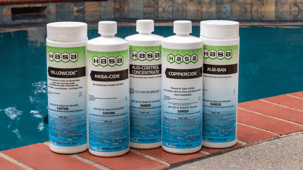
Algaecide Considerations: Specialty mustard-algae formulations or quaternary algaecides like Algi-Control Concentrate can be valuable supplements after brushing and chlorination, especially for pools with recurring outbreaks. Timing matters: add the algaecide after shocking, once free chlorine has returned to the proper range, so the products can work as intended. They are best used as support, not as a replacement for proper sanitizer maintenance.
Appearance: Black algae typically appears as small, dark blue-green to black spots or patches that cling tightly to the pool surface. It is most common in porous cementitious surfaces such as plaster and concrete, where colonies can establish themselves in pores, cracks, and surface imperfections. Unlike green or mustard algae, black algae usually cannot be easily brushed away.
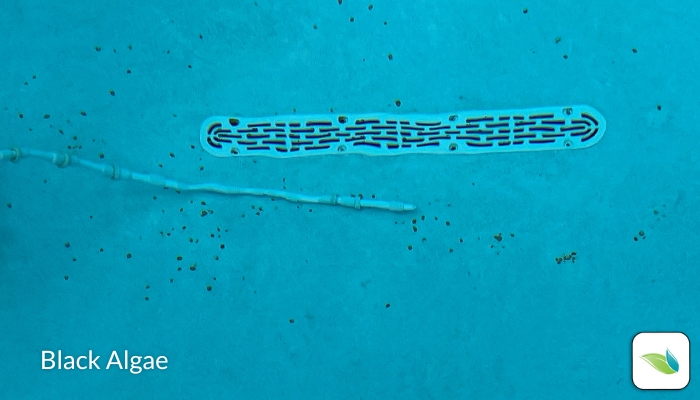
Treatment: With black algae, direct contact is critical. Start by aggressively brushing each affected area with a brush appropriate for the pool surface to break through the protective layer and expose the colony underneath. Maintain an elevated free chlorine level, but do not rely on chlorine in the bulk pool water alone. Persistent colonies often benefit from targeted treatment that keeps a strong oxidizer or EPA-registered black-algae treatment directly against the affected surface for the contact time specified on the label.
For example, Algi-Ban is a granular trichlor product specifically labeled for black algae in white plaster pools. For isolated spots on the pool floor, the product is applied directly over the brushed colony and allowed to remain in contact for 45–60 minutes before brushing again. Wall spots can also be treated by suspending the product in a cloth directly against the affected area according to label directions. Severe infestations may require repeated brushing and treatment.
Use caution with spot treatments. The same concentrated chemistry that makes prolonged contact effective can also damage pool finishes. Granular trichlor is a strong oxidizing and bleaching agent, so Algi-Ban should only be used on white plaster pools and should not be used on vinyl, fiberglass, painted, or colored plaster surfaces. Even on compatible surfaces, always follow label dosage and contact-time instructions rather than allowing concentrated chlorine to sit indefinitely on the finish.
Phosphate Considerations: If phosphate levels are elevated, phosphate management can also be incorporated into the pool's overall water-maintenance program. Phosphate removal does not kill black algae and should not replace chlorine, brushing, or direct treatment of established colonies. Its role should remain separate from the actual algae-treatment procedure.
Appearance: Pink slime is generally Serratia marcescens bacteria rather than algae. It forms a protective biofilm around skimmers, fittings, ladders and waterline tile.
Treatment: Remove the biofilm mechanically through brushing and cleaning while maintaining proper sanitizer.
Algaecide Considerations: Traditional algaecides are usually not the best choice. Biofilm-removal products and enzyme programs may complement proper sanitation.
Pollen, copper staining, iron staining, dirt and calcium deposits are commonly mistaken for algae. Always confirm the diagnosis before treating the pool and refer to comprehensive pool care tips and troubleshooting resources when in doubt.
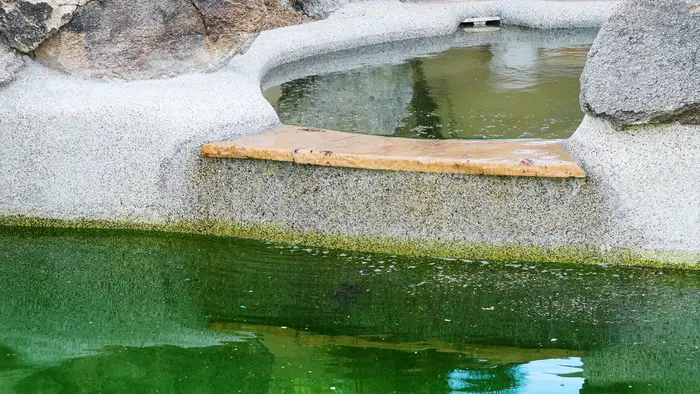
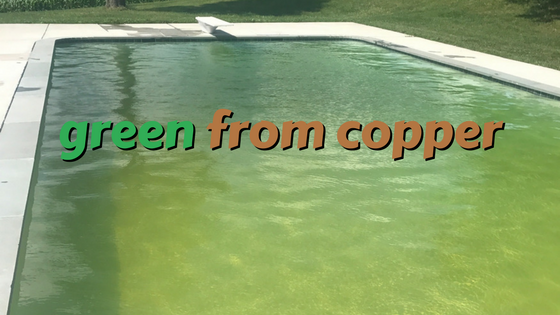 Pool was green due to the oxidation of higher concentrations of copper. Chlorine on this case can make the problem worse. Learn more.
The best algae treatment is prevention. Algae becomes much harder to establish when sanitizer, circulation, filtration, and routine maintenance remain consistent.
Maintain an appropriate free chlorine level relative to the pool's CYA concentration rather than relying on periodic shocking. Chlorine demand can increase after heavy bather loads, storms, contamination, or large amounts of organic debris, so test and adjust chlorine accordingly. If free chlorine falls behind demand, restore the appropriate residual promptly.
Brush the pool at least weekly, paying particular attention to steps, corners, behind ladders, around lights, and other areas with limited circulation. Regular brushing disrupts developing biofilms and exposes contaminants to chlorinated water before visible growth becomes established. Test the water routinely so changes in sanitizer and water chemistry can be corrected early.
Keep the filter clean and operate the circulation and filtration system long enough to adequately turn over, mix, and filter the water based on the pool's conditions and bather load. Monitor filter pressure and flow, and clean or backwash the filter when needed. Filtration removes suspended debris and material from the water, but it does not replace proper sanitation.
Good circulation helps distribute sanitizer throughout the pool. Pay particular attention to steps, benches, corners, behind ladders, and other areas where water movement may be limited. Adjust return fittings or circulation patterns when necessary to reduce stagnant or poorly mixed areas.
Skim leaves and other debris from the surface and vacuum settled material before it has time to decompose. Organic contamination creates additional chlorine demand, and accumulated debris can create protected areas where sanitizer has difficulty maintaining effective contact.
Phosphate levels can also be monitored as part of an overall water-maintenance program. Phosphates can enter pools through source water, fertilizers, landscaping runoff, organic debris, and other environmental sources. When phosphate levels are elevated, a phosphate-removal product can be used to reduce their concentration. Phosphate removal does not sanitize the water and should not replace proper chlorine, brushing, circulation, or filtration.
Maintain balanced water using the Langelier Saturation Index (LSI). Water temperature, pH, carbonate alkalinity, calcium hardness, total dissolved solids, and CYA all influence the LSI. Maintaining an appropriate LSI helps protect pool surfaces and equipment from scale formation or aggressive water.
The Orenda Calculator® app can calculate the LSI using current water chemistry and temperature, allowing you to anticipate how adjustments may affect water balance before adding chemicals.
Always follow product labels and proper chemical-handling procedures. Add chemicals separately and according to manufacturer instructions, never mix concentrated pool chemicals together, and store products in their original labeled containers in a cool, dry, well-ventilated location.
Different algaecides work through different chemistries, so choose the product based on the problem, pool surface, and treatment strategy.
Algaecides are supplemental tools, not substitutes for proper sanitation, circulation, filtration, and physical removal.
It depends on the situation. Proper chlorine levels, brushing, circulation, and filtration should remain the foundation of algae prevention and treatment. Algaecides can provide additional support for specific outbreaks, recurring problems, or seasonal closures, but different products use very different chemistries. Choose an algaecide based on the type of growth, pool surface, and intended application, and always follow the product label for dosage and treatment sequence.
Yes. Colder water generally slows algae growth, but it does not eliminate the possibility. The greatest risk often occurs during the transition into and out of winter, when water temperatures may still support biological activity but routine chlorination and maintenance have already been reduced.
For winterized pools, close the pool clean and properly sanitized, remove as much organic debris as possible, and account for sanitizer demand while the water cools. A covered pool can still accumulate contamination and lose sanitizer over time, so opening conditions depend heavily on how the pool was prepared and what happened beneath the cover during the off-season.
Recurring algae usually means some part of the original problem remains. Free chlorine may have fallen too low relative to CYA, the treatment may not have been maintained long enough, circulation may be poor in certain areas, or established growth may remain in places that were missed during brushing and cleaning.
Where you look next depends on the type of growth. Green algae may indicate inadequate sanitizer or excessive chlorine demand. Mustard algae can persist in shaded and protected areas and may be reintroduced on brushes, vacuum hoses, cleaners, toys, floats, or other equipment. Black algae can remain established in porous surfaces if colonies are not physically disrupted and treated thoroughly. Pink slime is different altogether—it is a bacterial biofilm rather than true algae.
If problems repeatedly return despite proper sanitation and cleaning, look beyond simply adding more chlorine. Evaluate circulation patterns, filtration performance, hidden areas of the pool, organic contamination, and other water-management factors. Phosphate levels can also be monitored and managed when elevated, although phosphate removal does not replace proper sanitation or directly treat an existing algae outbreak.
Every pool tells a story. Sometimes the clues point to algae, and sometimes they point somewhere else entirely. The important part is identifying what you are actually dealing with before choosing a treatment. Green, mustard, and black algae may share some basic treatment principles, but where they grow, how they persist, and what it takes to remove them can be very different.
Whether you care for one backyard pool or hundreds of commercial pools, resist the temptation to treat every problem with another chemical. Test the water, inspect the pool, understand the conditions, and then choose the appropriate response.
As I often tell my students: “Don't just treat the water—learn to read it.”
Not sure where your water stands right now? The Orenda app makes it easy to calculate and track water chemistry and the LSI, helping you make informed water-treatment decisions before small issues become larger ones.
Author: Jim Blanton
Jim Blanton brings a dynamic and diverse background to the pool industry, blending creativity, leadership, and decades of hands-on expertise. After early experiences as a child actor, stand-up comedian, Disneyland cast member, and U.S. Navy veteran, Jim found his long-term calling in the pool industry—where he has spent the past 25 years serving, educating, and advocating for pool professionals.
Currently a Sales Representative and Training Specialist for HASA, Jim is also the Vice Chairman of the California Pool & Spa Association, where he champions safety, innovation, and professional standards. With over 20 years as a Certified Pool Operator (CPO) Instructor through the Pool & Hot Tub Alliance (PHTA), Jim plays an active role in shaping the future of the industry through education and mentorship.
An award-winning trainer for the world’s largest pool supply retailer and a featured expert on Lifetime Network’s Designing Spaces, Jim is known for making education engaging, practical, and memorable. His career reflects a deep commitment to empowering pool professionals, improving safety, and leaving the industry stronger than he found it.

HASA : Sep 23, 2025
The Smart Way to Own a Pool: Safe, Clean, Clear Confidence A swimming pool isn’t just a backyard feature — it’s an investment in your family’s...
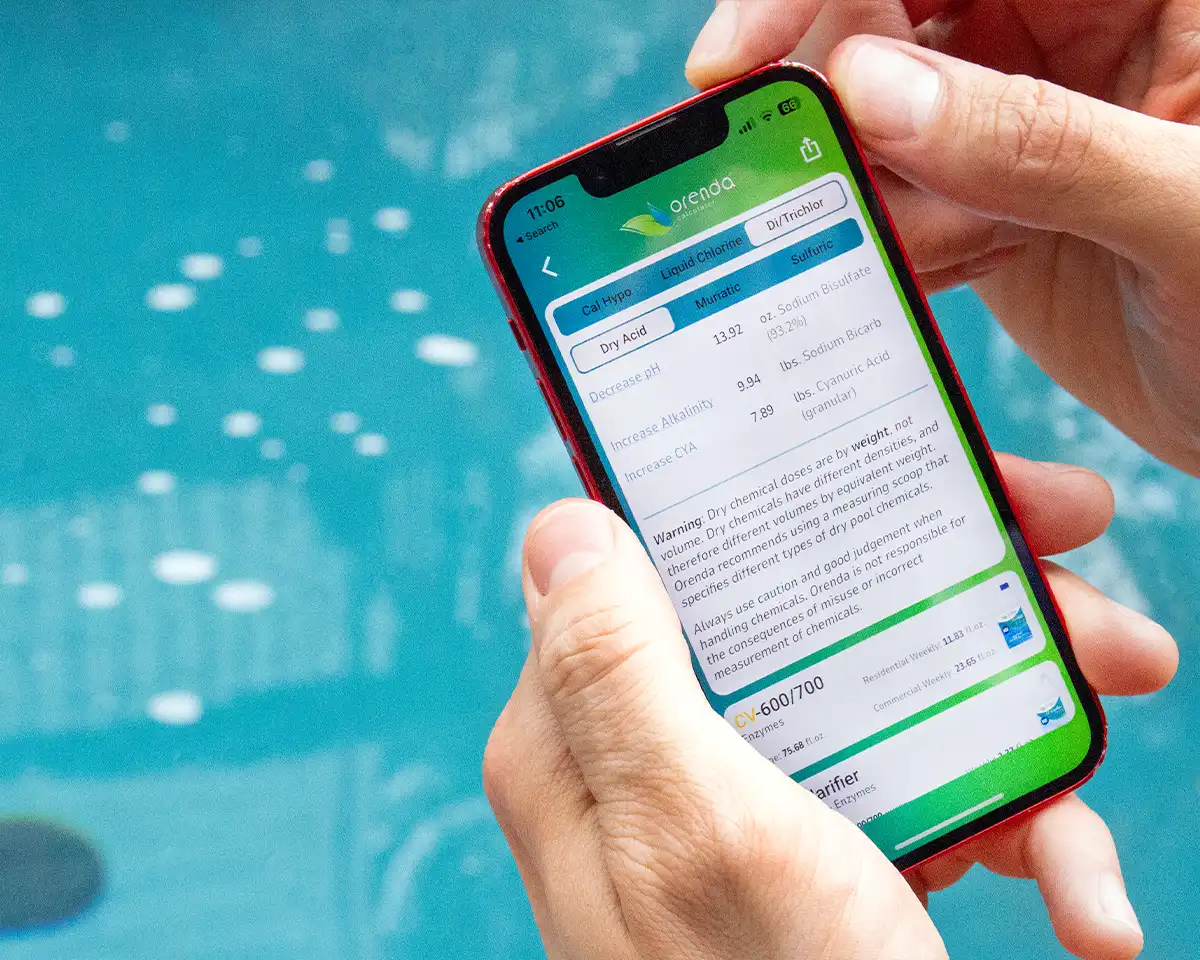
In the 1930s, Dr. Wilfred F. Langelier introduced something that reshaped how we understand water balance. It's called the Langelier Saturation...
When most people picture a pool service visit, they imagine a quick skim, a chemical top-off, and a wave goodbye. But anyone who’s watched real pool...