Understanding and Managing Pollen in Swimming Pools
Most people likely associate pollen with springtime sneezing, yellow coatings on cars, or the birds and the bees. But for pool owners and...

Pool Products
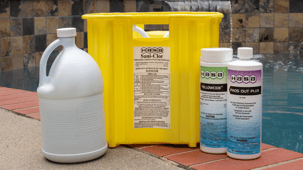
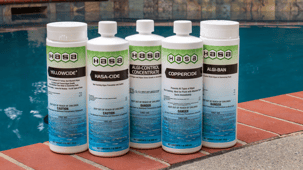
HASA has the chlorine, algaecides, and sanitizers you need to keep your pool or spa clean and clear.
Hot Tub Products
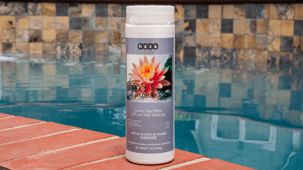
Shop our full line of Hi-Temp spa care products, including Eco-Safe Clarifiers and pH Increasers.
Performance Products
Our eco-friendly water treatments are science-backed and purposefully focused.

Mini-Bulk Program
We deliver a premium 12.5% sodium hypochlorite solution for sanitizing commercial pools and large-scale water systems.
6 min read

A sparkling, clear pool is the crown jewel of a backyard or neighborhood oasis. Clear water is beautiful and inviting, but more importantly, it’s a direct reflection of how well-maintained a pool is.
When water starts to turn hazy or dull, it’s usually an early sign that something is off and the pool may not be safe for swimmers.
For many pool owners, figuring out how to get crystal clear pool water can feel like guesswork. But in reality, pool water clarity comes down to a few core fundamentals: proper filtration, consistent sanitation, and managing the small particles you can’t always see.
This article breaks down the most common causes of pool water clarity issues, why cloudy pool water happens, and what it actually takes to keep water clean, safe, and visibly clear all season long.
Pool water clarity is important for three main reasons:
Because of these factors, one of the key tenets of pool maintenance for beginners is to never treat clarity as optional.
At its core, pool water clarity comes down to how well your pool is removing suspended particles. When those particles aren’t filtered out or broken down, they build up and create cloudy pool water.
In simple terms, water turns cloudy when tiny bits of material stay suspended instead of being removed. Causes of pool water clarity issues include common culprits such as:
But did you know that people themselves can contribute to water cloudiness? There’s a reason swimmers are encouraged to shower before entering the pool. What comes in on the body—sweat, oils, lotions, and even dead skin or hair—quickly becomes part of the water load, increasing demand on both the sanitizer and filtration system.
Additionally, two of the most common and often overlooked causes of cloudy pool water are:
In real-world pool maintenance, clarity comes down to visibility.
You should be able to clearly see the main drain (or a test object) at the deepest point of the pool from the deck. If you can’t, there’s a clarity issue, even if the water doesn’t look obviously cloudy.
There is, however, a measurable standard behind pool water clarity, used for public swimming pools and to monitor drinking water.
In technical terms, clarity is measured using turbidity, with a target of 0.5 nephelometric turbidity units (NTUs). The lower the number, the clearer the water. While this type of testing is typically done in a lab using a nephelometer, it reinforces an important point: clear water can be measured.
When dealing with cloudy pool water, the very first place to look is filtration. A filter is the pool system’s primary way of removing the small, suspended particles that impact water clarity.
When filtration isn’t working effectively, these micro-sized particles begin to accumulate. Most carry a similar electrical charge, which keeps them suspended and prevents them from settling, leading directly to pool water clarity issues.
Filters are rated by their ability to remove particles based on size, measured in microns. A micron is one millionth of a meter—meaning it's extremely small.
For comparison:
Pool filters are typically categorized as:
While these ranges are helpful, real-world performance depends on flow rate, system design, and overall filter condition. For example, sand filters are effective for larger debris but generally cannot capture particles smaller than about 25 microns. Over time, the sand itself wears down and becomes less effective, which is why periodic inspection and replacement are necessary.
All filters lose efficiency as oils and organic material build up in the media. This can restrict water flow, increase pressure, and reduce circulation, one of the most common contributors to hazy or dull water.
Routine maintenance is essential:
If a D.E. filter is compromised, the media itself can re-enter the pool and contribute to cloudiness, making the problem worse.
It’s also important to understand that no chemical can compensate for poor filtration. Clarifiers can help bind smaller particles together so they are more easily captured by the filter, and enzymes can help break down oils and organic contaminants before they accumulate in the filter media—but only if the filtration system is already functioning properly.
Put simply: Clear water starts with clean, well-maintained filtration. Everything else builds from there.
While filtration is the foundation, chemicals (chlorine in particular) play an equally important role in maintaining strong pool water clarity.
At a high level, pool chemicals fall into four categories that support clear water:
Each one contributes differently to preventing cloudy pool water and maintaining a clean, stable system.
Chlorine remains the primary sanitizer used in swimming pools because of its ability to control harmful microorganisms. It also acts as an oxidizer, helping break down non-living organic material such as dead algae, dust, skin cells, and other swimmer waste that can contribute to pool water clarity issues.
Additional systems like ozone and UV can support oxidation by reducing organic load before it interferes with chlorine’s effectiveness. These are often used in higher-demand pools to improve overall water quality.
When it comes to maintaining crystal clear pool water, the type of chlorine used can also make a difference. Liquid chlorine is fast-acting and does not introduce additional byproducts that can contribute to hazy water.
Other chlorine types can add materials that build up over time:
Clarifiers are designed to improve water clarity by binding very small particles together so they can be removed by the filter. Chitosan-based clarifiers are especially effective because they both coagulate and flocculate fine debris, making them easier to capture, particularly in sand filter systems.
Enzymes serve a different purpose by breaking down oils and organic contaminants before they accumulate. This helps reduce strain on both the sanitizer and the filtration system, while also preventing buildup that can lead to cloudy pool water or scum lines.
Clear water is vital for many reasons. Most importantly, it ensures the safety of swimmers to be clearly visible under the water and protect against recreational water illnesses.
Keeping crystal clear pool water comes down to consistent, proactive habits. These fundamentals go a long way in preventing cloudy pool water before it starts:
Staying ahead of these basics is the most reliable way to avoid cloudy water and maintain a pool that’s clean, manageable, and—most importantly—safe for swimmers.
Want to learn more about the products you use in your pool? View or download HASA product data sheets so you can clean safely and with confidence.

Most people likely associate pollen with springtime sneezing, yellow coatings on cars, or the birds and the bees. But for pool owners and...
When you walk past a pool and catch that strong “chlorine smell,” your first thought might be that there’s too much chlorine in the water. But here’s...

 HASA : Aug 01, 2025
Proper pool maintenance is essential for keeping your pool water crystal-clear, ensuring all the equipment functions effectively, and creating a safe...