1 min read
Using Liquid Chlorine in a Saltwater Pool
What is a Saltwater Pool? Just what is a so-called "saltwater pool"? There is confusion over this term because there are pools in the world that use...

Pool Products
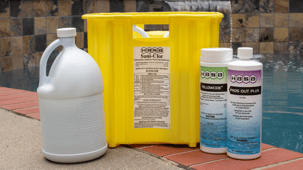
HASA has the chlorine, algaecides, and sanitizers you need to keep your pool or spa clean and clear.
Hot Tub Products
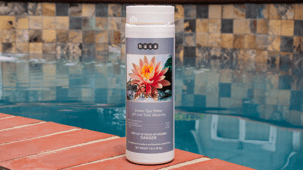
Shop our full line of Hi-Temp spa care products, including Eco-Safe Clarifiers and pH Increasers.
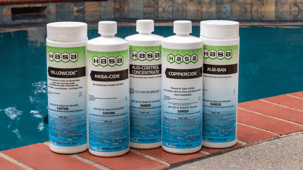
Performance Products
Our eco-friendly water treatments are science-backed and purposefully focused.
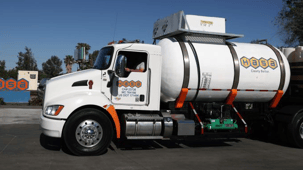
Mini-Bulk Program
We deliver a premium 12.5% sodium hypochlorite solution for sanitizing commercial pools and large-scale water systems.
5 min read

When we think of pool contamination, we usually picture leaves, dirt, bugs, pollen, or algae. But there is an entirely different category of waste that enters a swimming pool every single day, and it doesn't come from the sky or the surrounding environment. It comes straight from the people and pets swimming in it—and, if you're having a really bad day, a family of ducks. Regular testing of pool water chemistry is the first step for safety, because what gets introduced into pool water affects both swimmers and equipment.
Every time a bather steps into the water, they introduce a complex cocktail of non-living organic loads. This includes body oils, cosmetics, dead skin cells, and, most notably, sunscreens and body lotions. To make matters worse, they also introduce complex forms of organic nitrogen through waste like urea, from sweat and urine.
Once these organics hit the water, they don't dissolve and disappear. They float, bind together, and create a sticky, hydrophobic layer that if you are observant enough, you can distinguish sitting on top of the water as light reflects on a clear sunny day. This is the origin of the dreaded "scum line" around the waterline of the pool.
It’s not just a cosmetic eyesore; it is a physical manifestation of a massive organic demand that can quickly overwhelm your water chemistry and jeopardize filtration in the long run, creating undesirable conditions like channeling on sand type filters.
For decades, the standard industry answer to an influx of bather waste was simple: throw more chlorine at it. But chlorine is fundamentally a sanitizer and secondly an oxidizer, its primary job should be killing living pathogens like bacteria and algae. Understanding how oxidation, superchlorination and breakpoint chlorination work ensures that shock treatments are used appropriately and not as a crutch for poor organic management, especially when dealing with oxidation, superchlorination, hyperchlorination and breakpoint chlorination.
When chlorine is forced to act as a primary waste-disposal mechanism for heavy oils and sunscreens, it struggles. Non-living organics are complex, long-chain carbon molecules. Oxidizing them chemically with chlorine is an incredibly slow, inefficient process that consumes vast amounts of free chlorine. This can lead to a couple different chemical issues when the load is severe:
Before we try to burn these organics out with pure chemical force, we need to understand that there is a far more efficient way to dismantle them.
Think of enzymes not as chemicals, but as specialized biological workers. CV-600 and CV-700 use a proprietary blend of stabilized, natural enzymes specifically adapted to target and break down the complex carbon-carbon bonds found in non-living organic waste.
Instead of slowly trying to "burn" an oil or sunscreen molecule from the outside in like chlorine does, these enzymes act like molecular scissors. They lock onto the complex organic chains and instantly snap them into microscopic pieces. This completely breaks down the sticky matrix, dissolving the scum line and freeing up your chlorine to do what it does best: sanitize. By targeting organic contaminants, enzymes serve as an advanced treatment process that improve water quality.
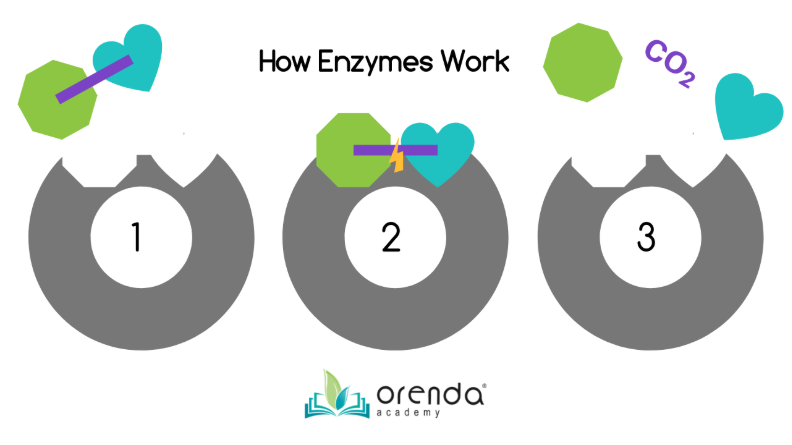
However, enzymes have strict limitations that every professional must understand:
Unlike chlorine or alkalinity, there is no reagent or test strip to measure an enzyme residual. It's an art based on visual diagnostics, tracking the bather load, and knowing the pool's history. When the bather load outpaces the effective removal of organic contamination, the physical symptoms are usually easy to observe, much like the classic warning signs of unbalanced pool water and its common fixes.
An oily sheen visible against the afternoon sun, or water that simply looks "thick" and dull, indicates the organic load is peaking. This is often seen after heavy pollen drops or a busy swim weekend. If the situation worsens, a greasy, sticky residue often forms on the tile line. At this point, the free chlorine is falling behind, trying to oxidize a wall of grease it was never designed to handle.
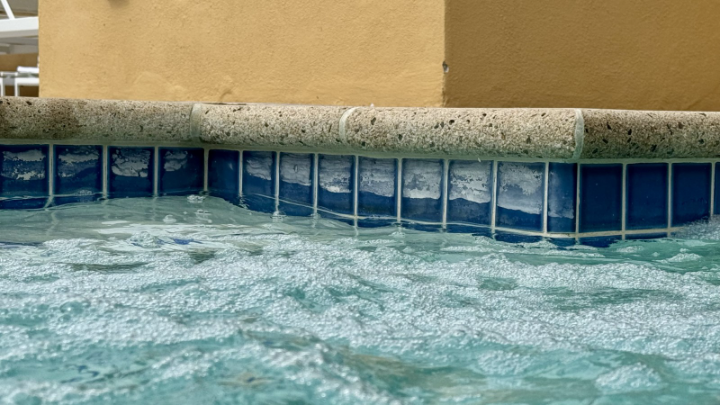
Finally, that sticky mess can get drawn into the system internally. This might go unnoticed until filter pressure spikes occur, or when pulling out cartridges only to find them coated in a heavy, grey grease. In sand filters, this organic gunk acts like glue, clumping the sand bed together and causing channeling. Either way, the filter is being forced to mechanically trap dense oils simply because there is not enough chemistry power left to break them down efficiently.
For residential pools, starting the season with a purge dose of 32 ounces per 10,000 gallons and a standard weekly maintenance dose—typically 3 to 5 ounces per 10,000 gallons—is usually sufficient to manage the baseline organic load. For standard commercial operations, the most efficient chemical strategy for managing organic loads is pairing routine enzyme dosing with a non-stabilized liquid oxidizer, specifically sodium hypochlorite. Unlike granular chlorines that leave behind accumulating byproducts like cyanuric acid (CYA) or calcium, liquid sodium hypochlorite as a primary sanitizer introduces nearly instant reactive hypochlorous acid to the water.
Because both products are liquids, this dynamic perfectly accommodates commercial automation. In high-traffic facilities, automated controllers and mechanical injection pumps ensure continuous, proportional dosing. This eliminates manual fluctuations and prevents sudden drops in chemical residuals that allow organic overload and combined chlorine to take hold in the first place, provided that proper pool chemical handling, storage and transport practices are followed. Crucial Note: These products must never be mixed or run through the same lines. Always use independent injection pumps and space the injection points apart on the return line, so the chemicals are diluted into the water stream before interacting.
While automation handles daily maintenance, the commercial sector also requires a proactive approach to massive high-traffic events. Demand must be gauged by tracking daily attendance so staff can increase the enzyme dose before a heavy swim event, rather than reacting to cloudy water after the fact. Proactively purging the water with enzymes beforehand digests incoming non-living organics immediately and prevents the chlorine from being overwhelmed.
However, if an extreme contamination event requires both a heavy shock and an enzyme purge, proper sequencing is critical. Always shock the pool first, wait for the chlorine to return to normal operating levels, and then add the enzymes. Although some enzymes can resist up to 20 ppm of free chlorine, separating these treatments guarantees maximum chemical efficiency and prevents conflicts.
Sunscreen, sweat, and body oils do not differentiate between a quiet residential backyard and a high-traffic commercial aquatic center. While the overall scope of the organic demand changes, the underlying chemistry remains exactly the same.
Left unmanaged, bather waste becomes an invisible tax on the sanitizer, a physical strain on the filtration system, and a visible ring on the tile line. For pool owners, whether managing a private backyard pool or a high-traffic commercial facility, the organic load challenge is universal.
Bridging the gap between residential and commercial maintenance ultimately comes down to a fundamental shift in water chemistry strategy. Rather than forcing a sanitizer to slowly burn through complex carbon chains, incorporating enzymes allows biological precision to handle heavy lifting. This protects the free chlorine, prevents the rapid formation of irritating disinfection byproducts, and keeps the water looking as clean as it feels.
Whether managing a 15,000-gallon backyard pool with a weekly manual dose or maintaining a 100,000-gallon commercial facility with automated liquid injection, the operational goal is identical. Non-living organics are not something to fight with pure chemical force—they are something to dissolve with biological efficiency.
Not sure where your pool stands? Crystal AI, HASA's free pool chemistry assistant, can help you interpret what you're seeing and build a dosing plan around it. You can also explore HASA’s premium water treatment products to support your overall sanitation and enzyme strategy. Get fast answers at crystalpool.com.

1 min read
What is a Saltwater Pool? Just what is a so-called "saltwater pool"? There is confusion over this term because there are pools in the world that use...

Water Treatment Methods Water treatment in swimming pools means adjusting and maintaining water chemistry so the water stays safe, balanced, and...
 HASA : Aug 01, 2025
Owning a pool should be about relaxation, not constant weekend upkeep. With the right strategies, efficient routines, and high-quality products, easy...